

Bringing Your Kitten Home
Your Kitten’s First Days at Home
What those first days really look like, what’s completely normal, and the small things that help most.
A Gentle Homecoming
Homecoming is exciting — and it’s also a big change for a tiny animal who has only ever known one home, one set of littermates, and one routine.
The good news: a calm, simple start helps a kitten settle in far more quickly. Here’s what those first days really look like, what’s completely normal, and the small things that help most.

The Ride Home
Settle your kitten into their carrier with a soft blanket or small bed inside — really just something to cushion the bottom — and keep the carrier closed and secure for the whole trip.
Most kittens do beautifully in the car. Many quietly watch the world go by, and quite a few simply fall asleep. A calm, quiet environment — easy on the music, gentle on the turns — helps them relax. Resist the urge to open the carrier to comfort them while moving; feeling enclosed is actually reassuring, and it keeps them safe.
The First Hour: Straight to the Home Base
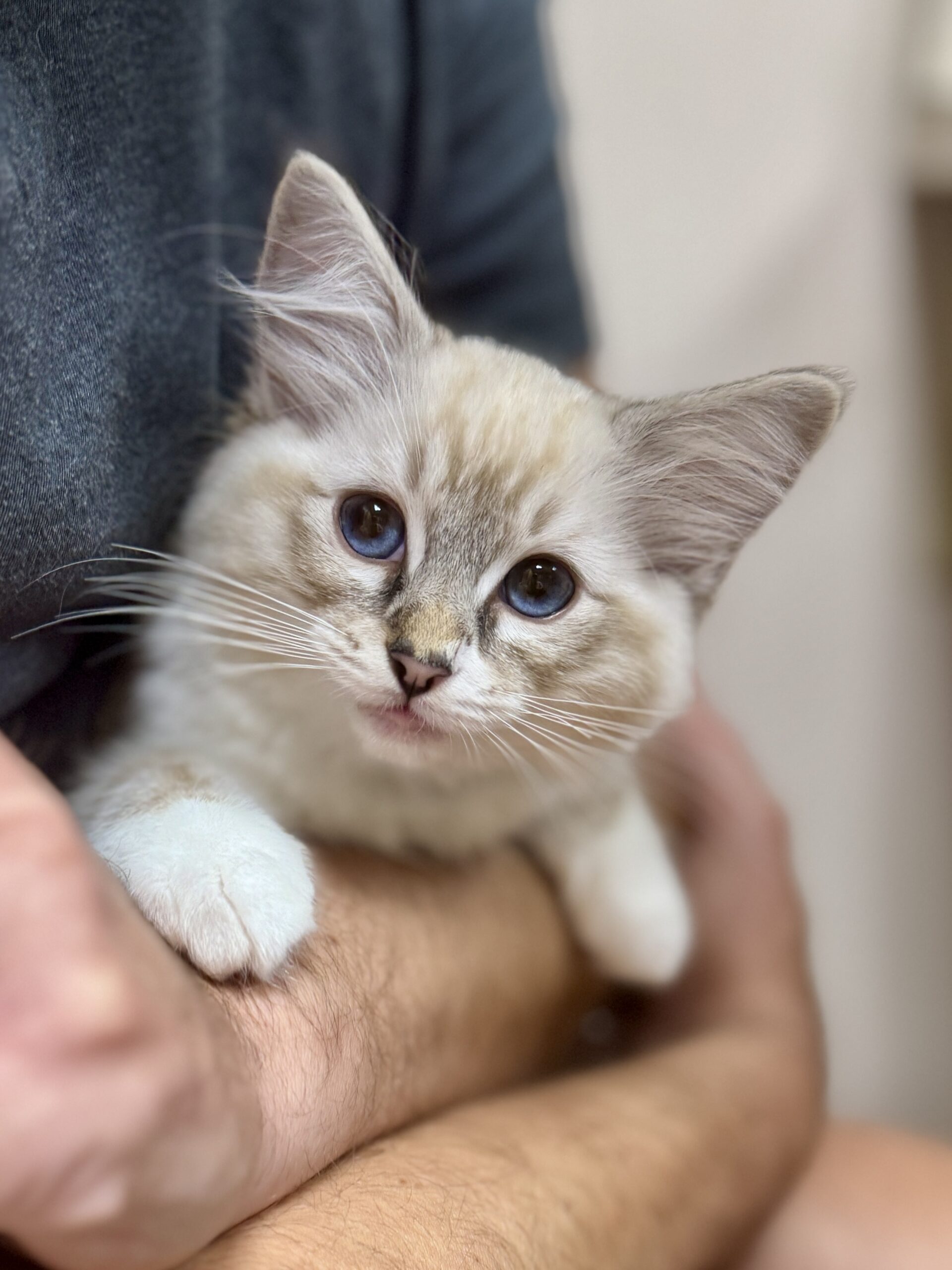
When you get home, bring your kitten directly to the quiet room you’ve prepared, close the door, and set the carrier down. Open it and let your kitten come out on their own — don’t reach in and pull them out.
Some step right out to explore; others sit and study the room first. Both are completely normal. Then just sit on the floor nearby and let them set the pace.
Not sure how to set up that first room? Here’s our full guide to Preparing Your Home.

What’s Completely Normal the First Few Days
Even the most social, affectionate kitten goes through an adjustment period. They aren’t unhappy — they’re simply figuring out where they are and who you are. In the first days you may see:
Tucking under furniture to feel safe while they observe. They’ll venture out more and more on their own — let them.
Taking in a whole new world is mentally tiring. Lots of rest is healthy.
Many kittens prefer to nibble when the house is quiet. Appetite picks up as they relax.
They’re used to sleeping in a pile of littermates. This almost always improves quickly.
Common from the excitement and change. As long as they’re eating, drinking, and comfortable, it usually settles on its own.
All of these are normal and temporary — the everyday stuff of a kitten settling in.
When to Call Your Vet
A few things aren’t part of normal adjustment and are worth a call to your vet:
- Persistent diarrhea or vomiting
- Refusing food and water
- Low, floppy energy that doesn’t bounce back
Your kitten comes home with complete health records to hand your vet, so they’ll have the full picture.
What Helps Most
The kindest thing you can do is let your kitten come to you — giving them a little control at the beginning builds trust far faster than constant holding.
A pair often settles faster in the first two weeks — they sleep better the first few nights and ask less of you while everything is still new.
- Sitting on the floor and talking softly
- Gentle play with a wand toy
- A calm, predictable room
- A parade of visitors
- Passing the kitten from lap to lap
- Opening up the whole house at once
- Rushing introductions with other pets
There’s plenty of time for all of it once they feel at home.
The Big Reassurance
Here’s the thing to hold onto: your kitten already is the personality you fell in love with in their photos and videos — you just may not see all of it the first day or two.
Once they realize they’re safe, it comes right back, usually even stronger than before.


The Aurora Head Start
When you bring home an Aurora kitten, your kitten arrives with a real head start. From nine weeks they live in our sunroom playroom just off the kitchen, surrounded by household sounds, new people, and other animals — so the ordinary commotion of a new home tends to rattle them far less. Many of our families are surprised how quickly their kitten is out exploring and curling up in a lap. You can see exactly how we raise them for this in our Kitten Socialization Program.

What Your Kitten Comes Home With
Every Aurora kitten goes home with a go-home kit of familiar comforts, so the transition is as gentle as possible.
Dry plus wet pouches, to bridge the change while their new supply arrives.
Smells like mom and their littermates — the fastest way to help them feel safe in a new place.
Two springs, two crinkle balls, two rattle balls, two plush mice, a silvervine stick, and a crinkle kicker toy.
TICA registration and vaccination records for your vet.
Simple feeding instructions and a first-week-at-home guide.
Homecoming Day
At the hand-off — whether that’s a local pickup, a partway meet, or an airport arrival — your kitten comes to you with their go-home kit, and then you’re off to that quiet first room together.


The Best Part Is Just Beginning
Take those first days slow and let them come to you — the kitten you fell in love with is right there. You’re joining the Aurora family, and we’re so glad you’re here.
More From the Library