
The Aurora Kitten Socialization Program
Thirteen Weeks, Planned One at a Time
Every week has its own developmental focus, its own space, and its own carefully chosen experiences.
Temperament Doesn't Happen by Accident
A kitten's temperament doesn't happen by accident. The first weeks of life quietly shape how a cat responds to people, new places, handling, and the everyday rhythm of a home. That's why, from the day they're born, every Aurora kitten grows up inside a structured, 13-week socialization program — a deliberate, week-by-week sequence of experiences designed to raise a cat who's confident, affectionate, and wonderfully easy to live with.
We don't leave any of it to chance.
Here's the whole journey, from their very first day to the day they come home to you.
What We're Raising Toward
By go-home day, our goal is a kitten who is:
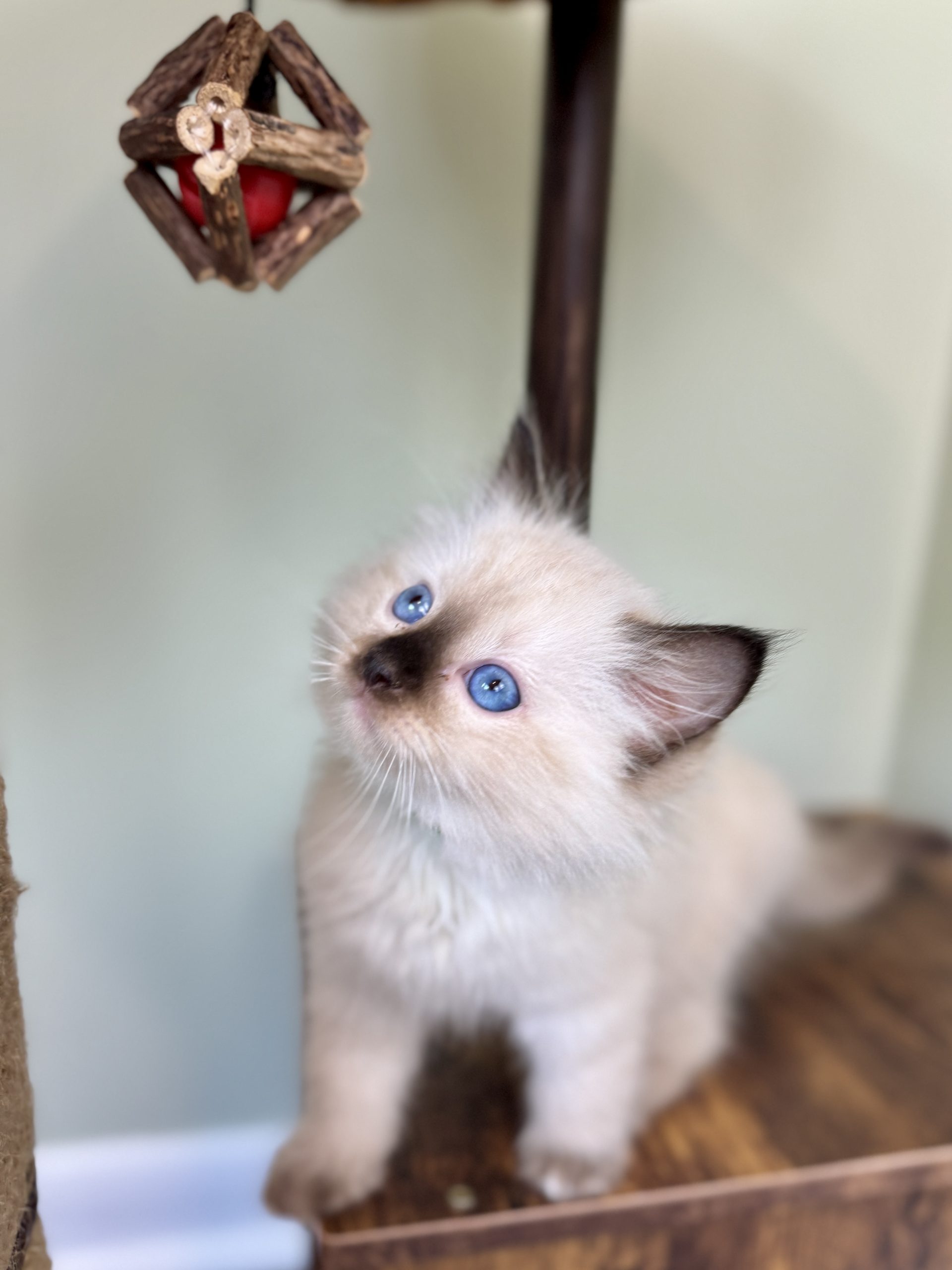
Settles in fast
Confident and curious in new environments
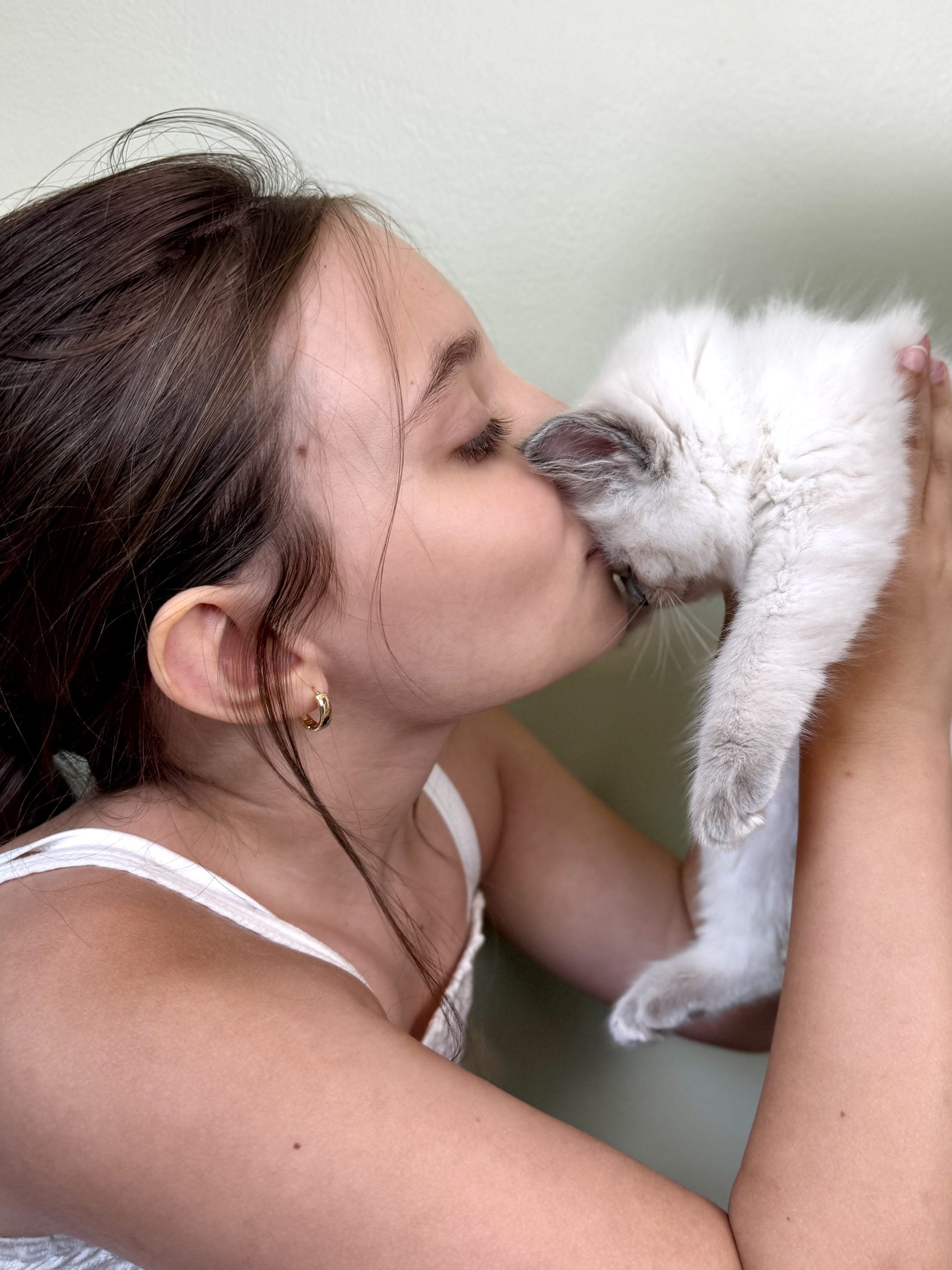
Easy at the vet
Comfortable being handled, held, and groomed
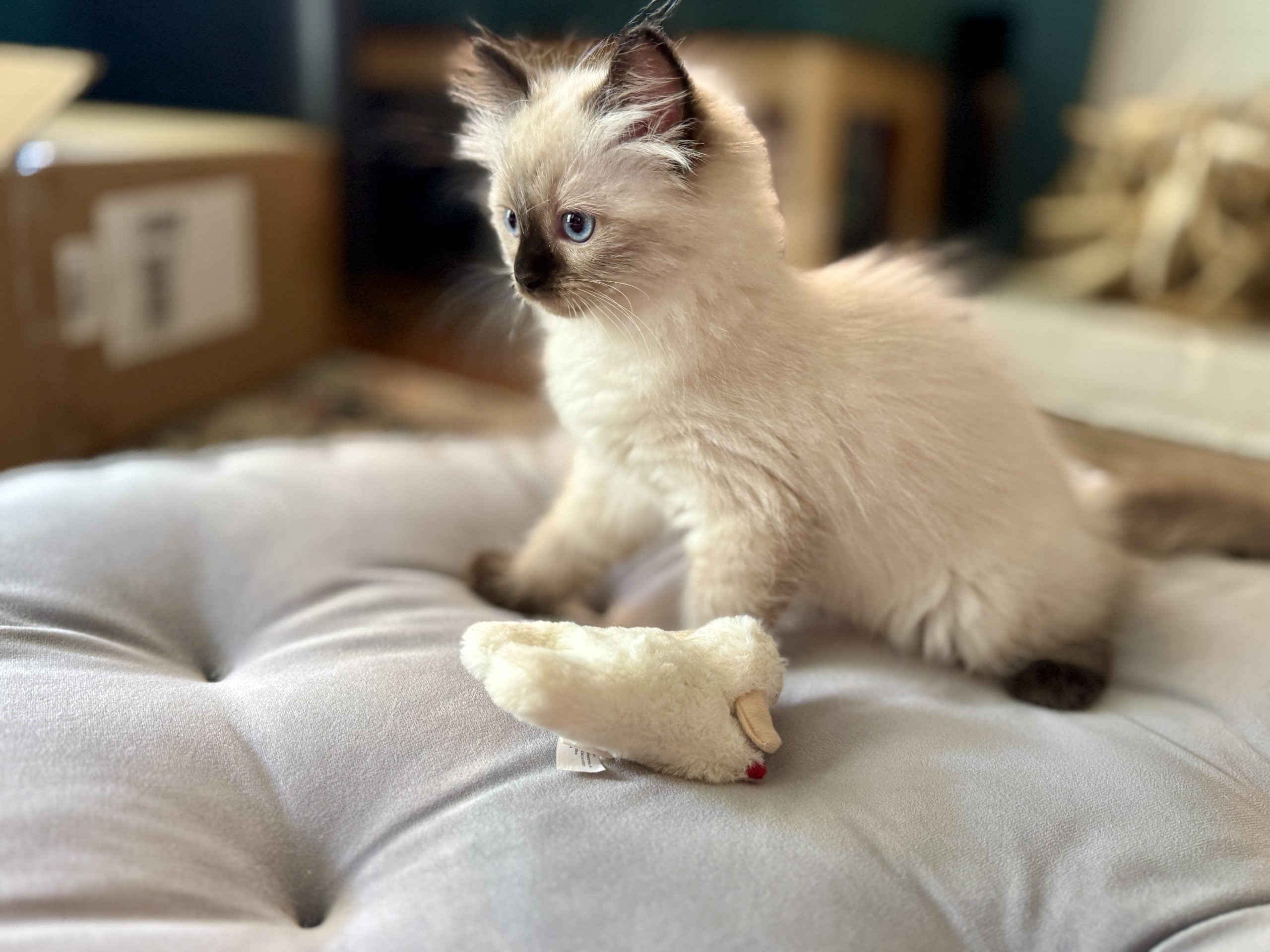
Wants to be near you
Relaxed and affectionate around people
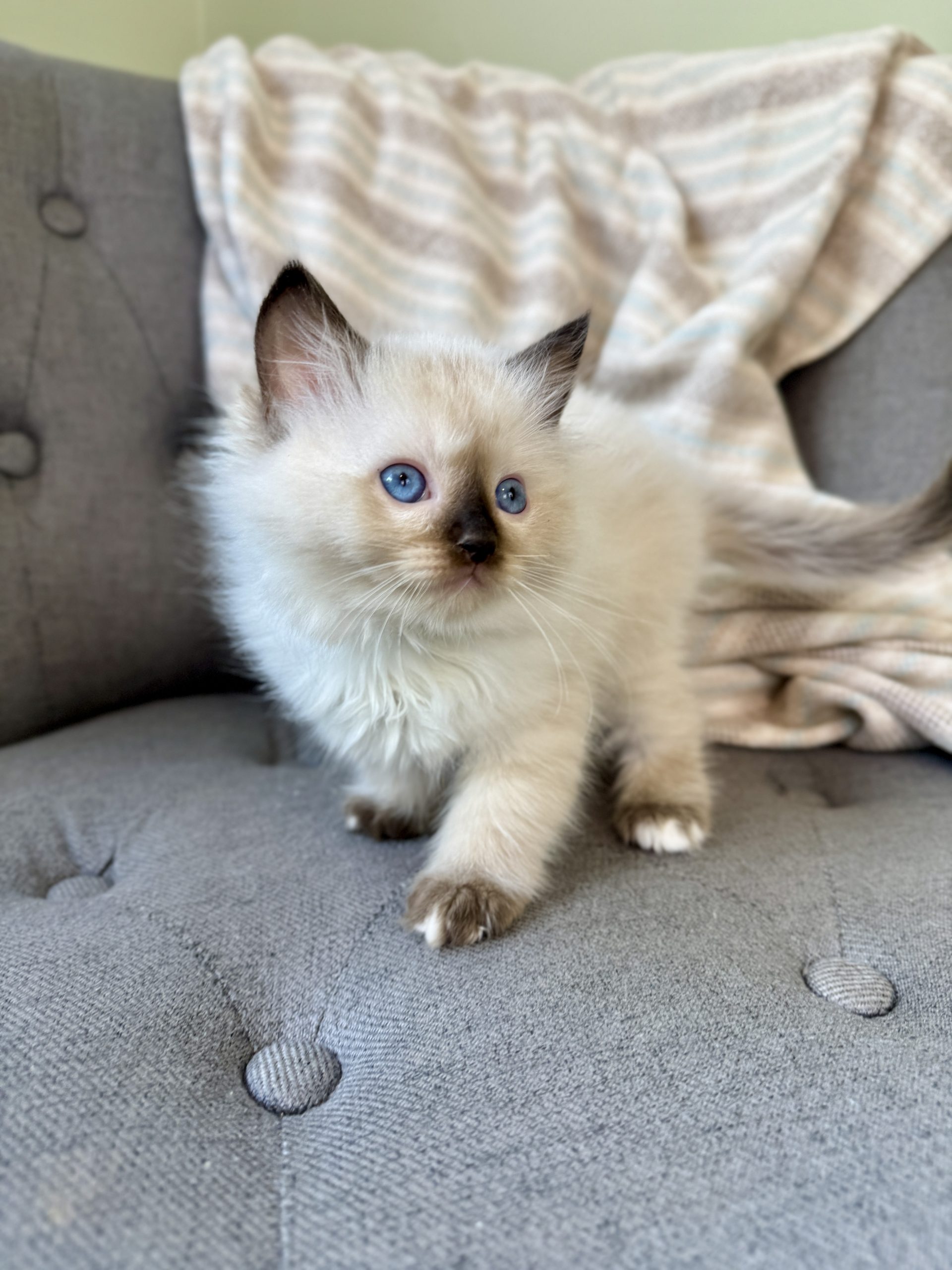
Fits your real life
Unbothered by the normal noise of a household
Week by Week
The 13-Week Journey
Week 1 — Safety & Attachment
Snuggled in the nesting pod with mom, the kittens get their very first, gentlest handling — soft touches and being held briefly in different positions, so they get used to our scent. They're forming their earliest sense of safety and trust, and this gentle start lowers stress responses for the rest of their lives.
Week 2 — Sensory Awakening
As their eyes and ears wake up, we add short daily holds, gentle touches to paws, ears, and tail, cozy cradling, and even a first tiny nail trim. This window strongly shapes how relaxed they'll be about handling and grooming down the road.
Week 3 — Early Social Stage
The whole family joins in the gentle handling now. Kittens meet their first litter box, soft toys, and new textures like blankets and pillows, plus a daily trip to the living room. People, textures, and everyday objects start to feel like normal, unremarkable parts of the world.
Week 4 — Body Awareness ("Poopy Week")
Now in a kitten room, they start eating wet food and learning the litter box — which earns this stage its affectionate nickname. We add gentle brushing and lots of supervised play as their coordination blooms. It's all about body awareness and building good litter habits.
Week 5 — Coordination & Play
Play gets serious and joyful: tunnels, chasing games, floor scratchers, and their first short wand-play sessions — always ending on a triumphant "catch." This builds coordination, confidence, healthy predator play, and the foundations of gentle, bite-inhibited play.
Week 6 — Confidence & Active Play
Active play ramps up with motorized wand toys and plenty of climbing — and the kittens meet Sunny, our Goldendoodle, for the very first time. They're building social confidence, coordination, and adaptability.
Week 7 — Environmental Confidence
One of the most important windows of all: we leave an open carrier out to explore, carry the kittens around outside, and take them on their first short car rides, tucked safely in their carrier. This peak confidence-building stage makes travel and new places feel completely normal.
Week 8 — Field Trips & Exploration
The field trips begin in earnest — supervised adventures exploring the different rooms of our home, with group exploration and new toys in new spaces. Repeated, safe exposure teaches kittens that unfamiliar places are nothing to fear.
Week 9 — Grooming & Emotional Regulation
Now settled in the sunroom playroom, kittens practice grooming and brushing, get used to new sounds like running water, and work on staying calm and settled in new environments. They grow more emotionally regulated and more tolerant of grooming and household routines.
Week 10 — Independence Training
Time for a little independence: short solo adventures away from their littermates, one-on-one time with Sunny, gentle handling in new rooms, and a couple more car rides. Kittens learn they can feel safe and confident all on their own.
Week 11 — Advanced Play & Confidence
More of the house opens up on field trips, the kittens are introduced to our adult cats, and they enjoy daily independent playtime alongside some of the other mamas. It deepens their physical confidence, coordination, and adaptability.
Week 12 — Household Preparation
The finishing touches on becoming a house cat: everyone gets a warm bath and a gentle blow-dry, lots of calm reassurance through each new experience, independent play throughout the house, and their spay or neuter visit to the vet. It all smooths the transition into a normal home.
Week 13 — Final Home Preparation
The home stretch, just for you: play with a wide variety of toys, quiet time to crawl into a lap and nap, more field trips through the house, time with the inside cats and Sunny, and getting familiar with an automatic litter box like the ones many of our families use at home. This final stage locks in confidence, adaptability, and emotional regulation right before they come home to you.
Enrichment That Grows With Them
Play isn't just for fun here (though there's plenty of that) — it's one of our most deliberate tools. Every room runs on a rotating toy schedule, matched to what a kitten needs at each stage: soft plushies and lightweight balls for the tiniest explorers, crinkle balls and tunnels as coordination kicks in, then wand toys, motorized toys, and climbing structures as active play takes off. A few favorites stay put as familiar comforts while fresh toys rotate in, and we keep every space meticulously clean — a tidy, low-stress environment helps kittens feel secure and ready to learn.
We're just as intentional about who they play with: solo play, time with littermates, and — when we can tell they're ready — supervised play with kittens of different ages, so they learn to get along with all kinds of cats. Every rotation, every fresh setup, every new playmate is one more small, purposeful step toward a confident, well-adjusted companion.
Why It Works
Many of the behavior challenges people face with cats trace back to a lack of positive experiences early in life. By building those experiences in from the very first day — thoughtfully, on a schedule, and always on the kitten's terms — we help prevent problems long before they'd ever have a chance to begin. It's the difference between hoping for a good temperament and raising one.
The Aurora Philosophy
Confident, affectionate cats begin with thoughtful early care, a well-supported mother, and intentional socialization.
This program is the heart of how Ashley and Dylan raise every litter — and a big part of what it means to join the Aurora family.
The Kitten at the End of Thirteen Weeks
Every week of this program is aimed at one moment: the day your kitten walks into your house and settles in like they've always lived there.
See Available Kittens