

Getting to Know Ragdolls
Are Ragdolls Hypoallergenic? An Honest Look at Ragdolls & Cat Allergies
No cat is truly hypoallergenic — Ragdolls included. Here’s what actually causes cat allergies, and what genuinely helps.
If You Love Cats but Sneeze
If you love cats but sneeze around them, you’ve probably searched “hypoallergenic cat breeds” and seen Ragdolls on a list or two.
We’re going to be straight with you: no cat is truly hypoallergenic — and that includes Ragdolls. But that’s not the end of the story. Understanding what actually causes cat allergies, and what genuinely helps, can make all the difference in whether you can happily share your home with one.

First, the Honest Truth
You’ll see certain breeds marketed as hypoallergenic, but the science doesn’t support treating any breed as allergy-free. The trigger for most cat allergies isn’t the fur itself — it’s a specific protein cats produce, and every cat produces it.
So while some people do find they tolerate one cat better than another, that’s about the individual cat and good management, not a magic breed. We’d rather tell you that up front than let you find out the hard way.
Meet the Real Culprit: A Protein Called Fel d 1
The main cat allergen is a tiny protein called Fel d 1. It’s responsible for the allergic reaction in roughly 90% of people with cat allergies.
Here’s the key part: Fel d 1 isn’t in the fur. It’s produced mainly in a cat’s saliva and skin glands — and when a cat grooms, they spread it all over their coat, where it dries, flakes off with dander, and floats around your home. That’s why even a hairless cat can trigger allergies: less hair, but still plenty of Fel d 1.
What really does affect how much Fel d 1 a cat makes
- Sex and neuter status. Intact males produce the most Fel d 1; females and neutered males produce less. Sex is the one physical characteristic shown to correlate with allergen levels.
- Age. Kittens produce less Fel d 1 than adult cats — worth knowing, because it means a reaction can appear or worsen as a kitten matures.
- The individual cat. There’s big cat-to-cat variation. Genetics matter, and one cat can simply make more or less than another.
What matters less than people think
- Coat length and colour have no proven influence on how much Fel d 1 a cat produces.
- Breed isn’t a reliable predictor either — which is exactly why hypoallergenic-breed lists can be misleading.
So, Where Do Ragdolls Land?
Honestly? Ragdolls are a lovely breed, but they are not a hypoallergenic one, and we’d never tell you otherwise.
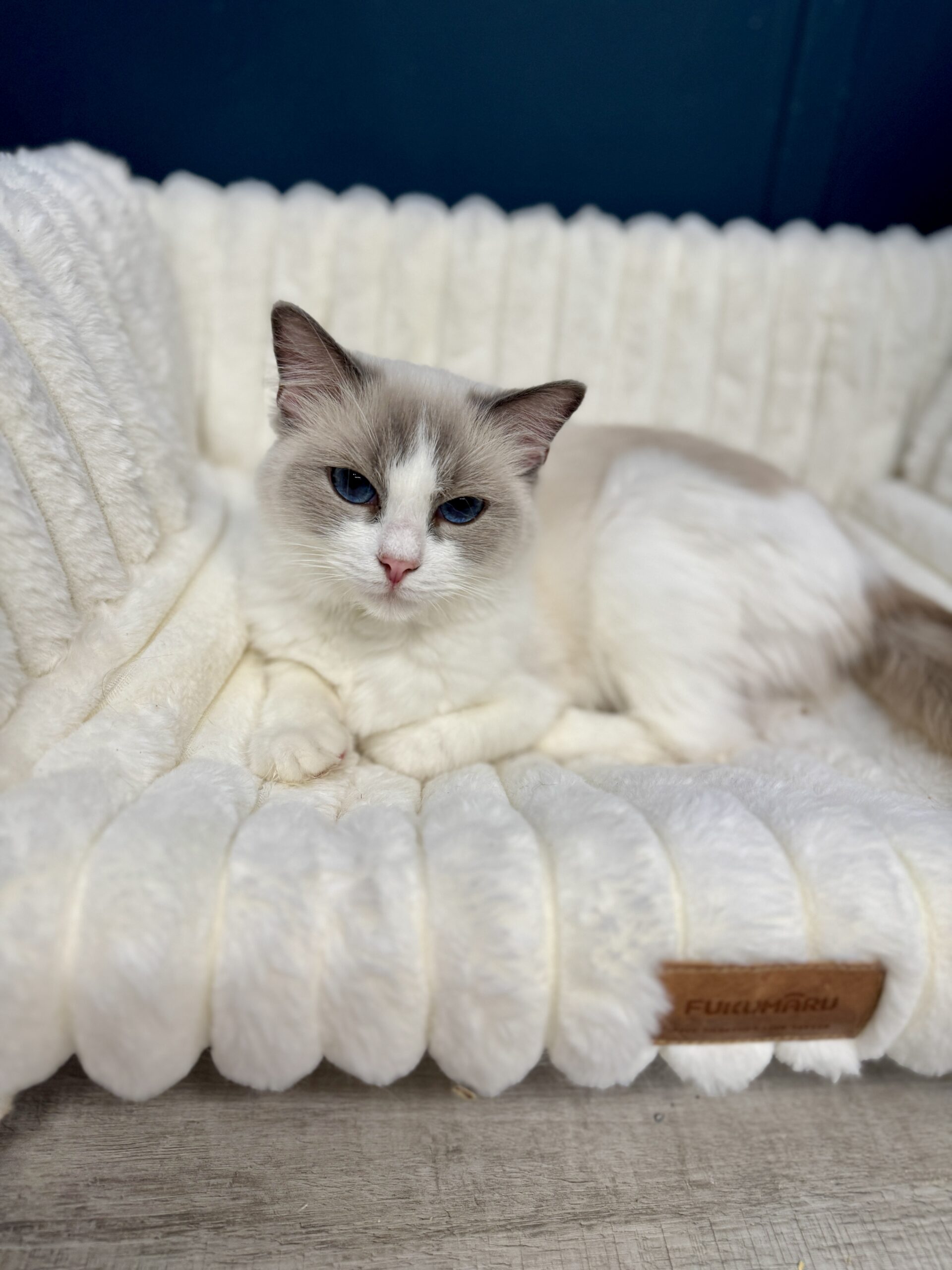
What we can say fairly is this: Ragdolls have a silky coat with little undercoat and moderate shedding, so there tends to be less loose, allergen-carrying fur and dander drifting around than with a heavy-shedding cat. For some allergy-sensitive families, less airborne dander can mean fewer symptoms — but the Fel d 1 is still there, and everyone’s allergies are different.
What Actually Helps
Here’s the encouraging part: many people with mild-to-moderate cat allergies live happily with cats by stacking a few smart strategies. None is a cure on its own, but together they can make a real difference:
Especially the bedroom. Keeping the cat out of where you sleep gives your body hours of low-allergen recovery every night.
Run a HEPA air purifier in the rooms you use most, and vacuum with a HEPA-filter vacuum regularly. Wash soft furnishings and cat bedding often.
And try not to touch your face until you do.
Regular brushing and cleaning, ideally by a non-allergic family member, removes loose, allergen-laden hair and dander before it spreads. Wiping the cat down can help temporarily, though the effect is short-lived.
Since sex and neuter status are the one physical factor shown to lower Fel d 1, an altered cat trends lower on allergen production. Every Aurora kitten goes home already spayed or neutered.
Talk to an allergist. Antihistamines, nasal sprays, and allergy immunotherapy help many people live comfortably with cats — a conversation for your doctor.
The Smartest Step: Spend Time Around Ragdolls First
If allergies are a real concern for your household, the single most sensible thing you can do is spend meaningful time around cats — and ideally around Ragdolls specifically — before you commit.
Because we’re a closed cattery, that time can’t be with our cats. But there are good options:


A friend or family member with a cat, ideally more than one visit and more than a few minutes.
A local Ragdoll owner. Breed groups on Facebook are full of people happy to help someone who’s trying to be careful.
A TICA cat show. Ragdolls are shown regularly, there’ll be many in one room, and it’s an unusually good real-world test.
A cat café or shelter, which won’t tell you about Ragdolls specifically but will tell you about cats.
Reactions vary enormously from person to person and cat to cat, and a lifelong companion is far too important a decision to guess at. Loop in your allergist, try the strategies above, and see how you do.
Where We Stand
We’ll never market our kittens as hypoallergenic, because it wouldn’t be true.
What we can tell you is genuinely relevant: every Aurora kitten goes home spayed or neutered, and since sex and neuter status are the one physical factor shown to lower Fel d 1, that’s a small, real point in an allergy-sensitive family’s favour — no overselling required.
More than anything, we want the right fit for both you and the kitten. If allergies are part of your picture, we’d genuinely rather you take your time, do your homework, and be sure — even if that means the timing isn’t now. A kitten is for their whole life, and we care about that more than a placement.
This article is general information, not medical advice. For anything about your own allergies or health, please talk with your doctor or a board-certified allergist.

Honesty First, Always
We’d rather you go in clear-eyed and sure than oversold and surprised. If a Ragdoll turns out to be right for your home, we’re so glad you’re here.
More From the Library