

Living With Your Ragdoll
How to Raise a Lap Cat: Bonding With Your Ragdoll
The cuddly, follow-you-around companion isn’t just luck — it’s built, in a language your cat already speaks.
Bonding, in a Language They Speak
Ragdolls are famous for being affectionate, floppy, follow-you-around companions — but the cuddly cat you’re picturing isn’t just luck. So much of who a kitten becomes is shaped by how you show up for them, especially in the early weeks.
Here’s how to build that bond, in a language your cat already speaks.

Let Them Set the Pace
The single best thing you can do in the first days and weeks is let your kitten come to you. Sit on the floor, talk softly, and let them investigate you on their own terms.
If you’re wondering how to teach a kitten to play on their own, a second kitten is the thing that helps most — they keep each other busy between your lap sessions.
It feels a little backwards — you want to scoop them up and snuggle right away — but giving your kitten a sense of control is exactly what builds trust the fastest.
The affection you’re hoping for comes sooner when you let them choose it.
Bond Through the Everyday
Trust is built in small, ordinary moments:

A daily wand-toy session, ending with a catch they can feel proud of, burns energy and builds connection.

Being the one who brings meals makes you a very good thing in their world.

Soft brushing feels good and echoes the way their mom and littermates groomed them.

Reading or working while they nap nearby teaches them that being close to you is safe and cozy.
A Few More Ways to Grow a True Lap Cat
Cats chase warmth and softness, so a cozy blanket over your lap while you sit still turns you into their favorite destination.
Wrap up petting or holding before they’ve had their fill, so every cuddle ends happy — a cat whose snuggles never tip into too much keeps coming back for more.
A small treat when they hop up or come when called teaches them that being near you is always worth it.
Answer their chirps and little meows and use their name — Ragdolls especially love a human who chats with them.
Trust is fragile, and a cat who feels completely safe with you is a cat who wants to be on you. Point unwanted behavior toward a toy or scratcher instead of punishing.
Those head-bumps and cheek-rubs are your cat claiming you as family — lean right into them.
Learning Their “Yes”
Your cat is always telling you how they feel. These are the signs your cat feels safe, happy, and bonded to you:
The famous kitty kiss. A slow, soft blink means I trust you.
Often with a little hook at the tip: a happy, confident hello.
That rumble and the making-biscuits paws are pure contentment.
A big sign of trust. Usually I feel safe, not always please rub my tummy — some love it, some don’t, and they’ll let you know.
Your cat choosing to be wherever you are is love, plain and simple.

When your cat gives you a slow blink, try slowly blinking back. It’s the cat version of I love you too, and a lovely way to build trust in a language they already speak.
Learning Their “I Need a Minute”
Just as important is knowing when your cat is asking for a pause:
None of these mean anything is wrong — your cat is just asking for space. Give them quiet and let them come back on their own. Pushing for interaction when they’re overwhelmed only slows things down.
“Will My Cat Sleep With Me?”
One of the most common questions — and the honest answer is that we can’t promise it, since every cat has their own personality. But it’s more common than you’d think:

Around half of pet cats sleep in their owner’s bed.
The American Pet Products Association’s National Pet Owners Survey has consistently found it.
Cats aren’t truly nocturnal. They’re crepuscular — most active at dawn and dusk, and very adaptable, which is why so many settle right into their family’s routine.
To encourage it, build an evening wind-down:
Make your bed a warm, inviting option, keep it their choice, and stay consistent. And if they’d rather sleep at the foot of the bed, or do their rounds and join you at 5 a.m. — that’s still them choosing you.
The Aurora Head Start
Here’s the happy secret: with an Aurora kitten, a lot of this bonding work is already underway before they ever come home. From their very first weeks, our kittens are held, talked to, and played with by our whole family — so they arrive already believing that people are safe, warm, and wonderful.
That head start is a big part of why Aurora families so often tell us their kitten was curling up in a lap within days. You’re not starting from scratch; you’re continuing a bond we’ve already begun. See exactly how we raise them for it in our Kitten Socialization Program.
Most of all, be patient and intentional. Some kittens are curled up in your lap by day two; others take a couple of weeks. Both become the same devoted, velcro-soft companion in the end.
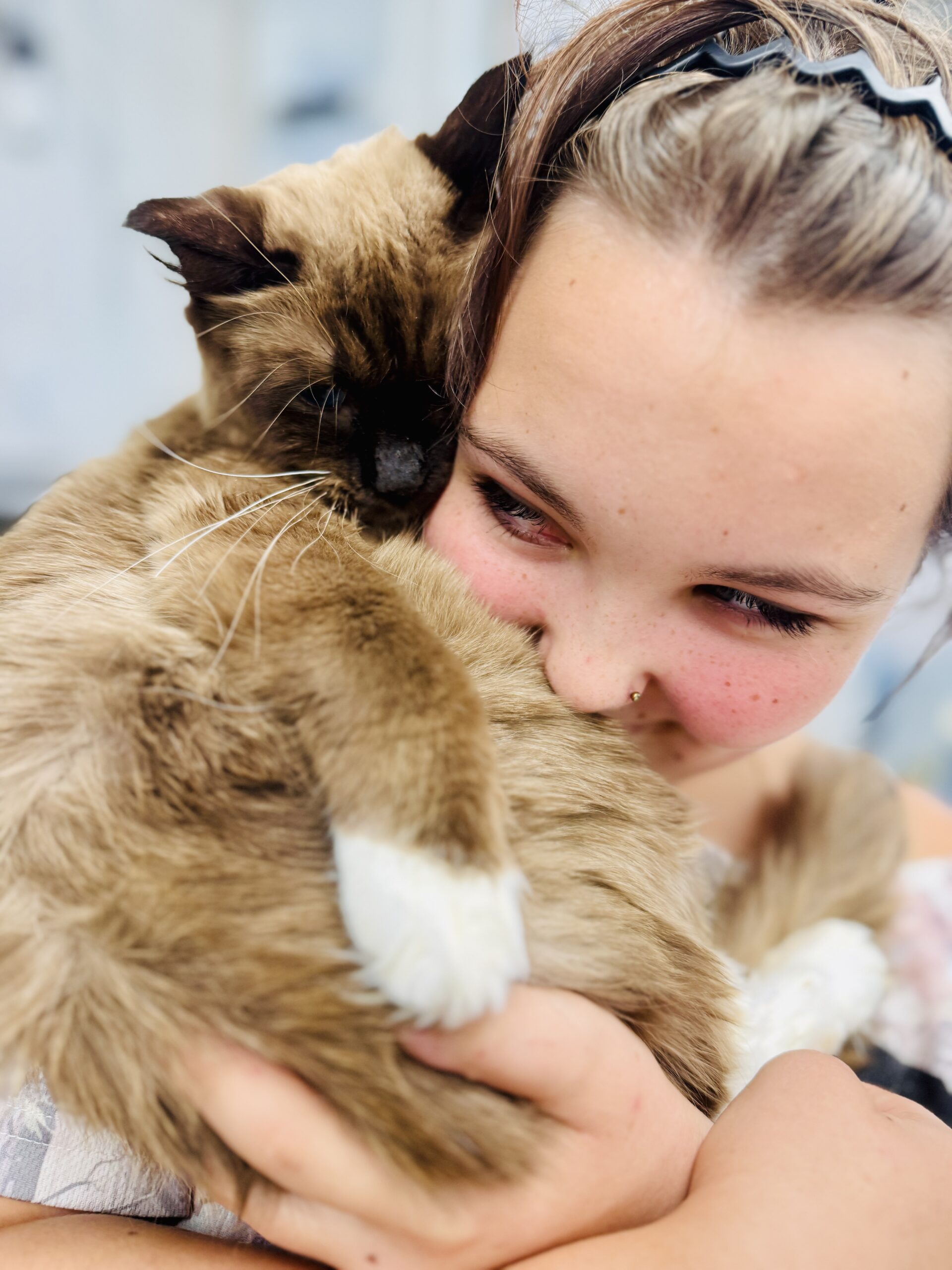
The Velcro-Soft Companion You Pictured
Show up in small, gentle ways, and the lap cat comes — often sooner than you expect. You’re joining the Aurora family, and we’re so glad you’re here.
More From the Library