
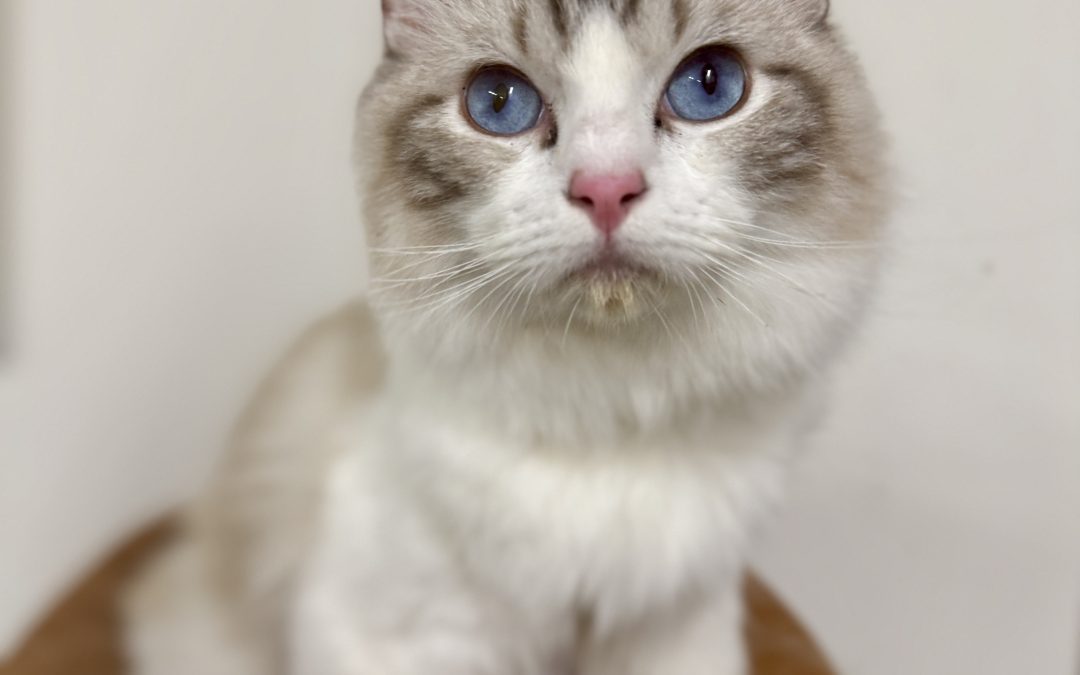
Ragdoll Colors & Patterns
A Plain-Language Guide to the Coat
Colorpoint, mitted, bicolor, seal, blue, lilac, mink — what the words mean, and what you're actually looking at.
The Vocabulary Sounds Harder Than It Is
One of the most fun parts of falling for a Ragdoll is the coat. Those blue eyes and softly contrasted colors are part of what makes the breed so striking. But the terms — colorpoint, mitted, bicolor, seal, blue, lilac — can feel like a lot at first.
Here's a plain-language guide from Ashley and Dylan to help you understand what you're looking at, so you can enjoy the differences without getting lost in the vocabulary.
The Science, Simply
Why Ragdolls Look the Way They Do
Most Ragdolls share two hallmarks: deep blue eyes and a coat that's lighter on the body and darker on the "points" — the ears, face, legs, and tail.
Here's the secret: the cooler a part of the body, the darker it grows.
It comes from a temperature-sensitive gene. Pigment develops more on the cooler parts of the body, so the extremities turn dark while the warm core stays light. It's also why Ragdoll kittens are born nearly white — and why their color keeps deepening and defining for the next one to two years.
On top of that base, white markings create three distinct patterns. That's really the whole system: a point color, plus how much white a kitten carries.
There's one more layer, and it's the one that trips people up most: the strength of that temperature-sensitive gene varies. Turn it down and you get the classic pale-bodied, blue-eyed Ragdoll. Turn it up and you get a richer, warmer cat with aqua eyes — a mink. We break that down in full a little further along.
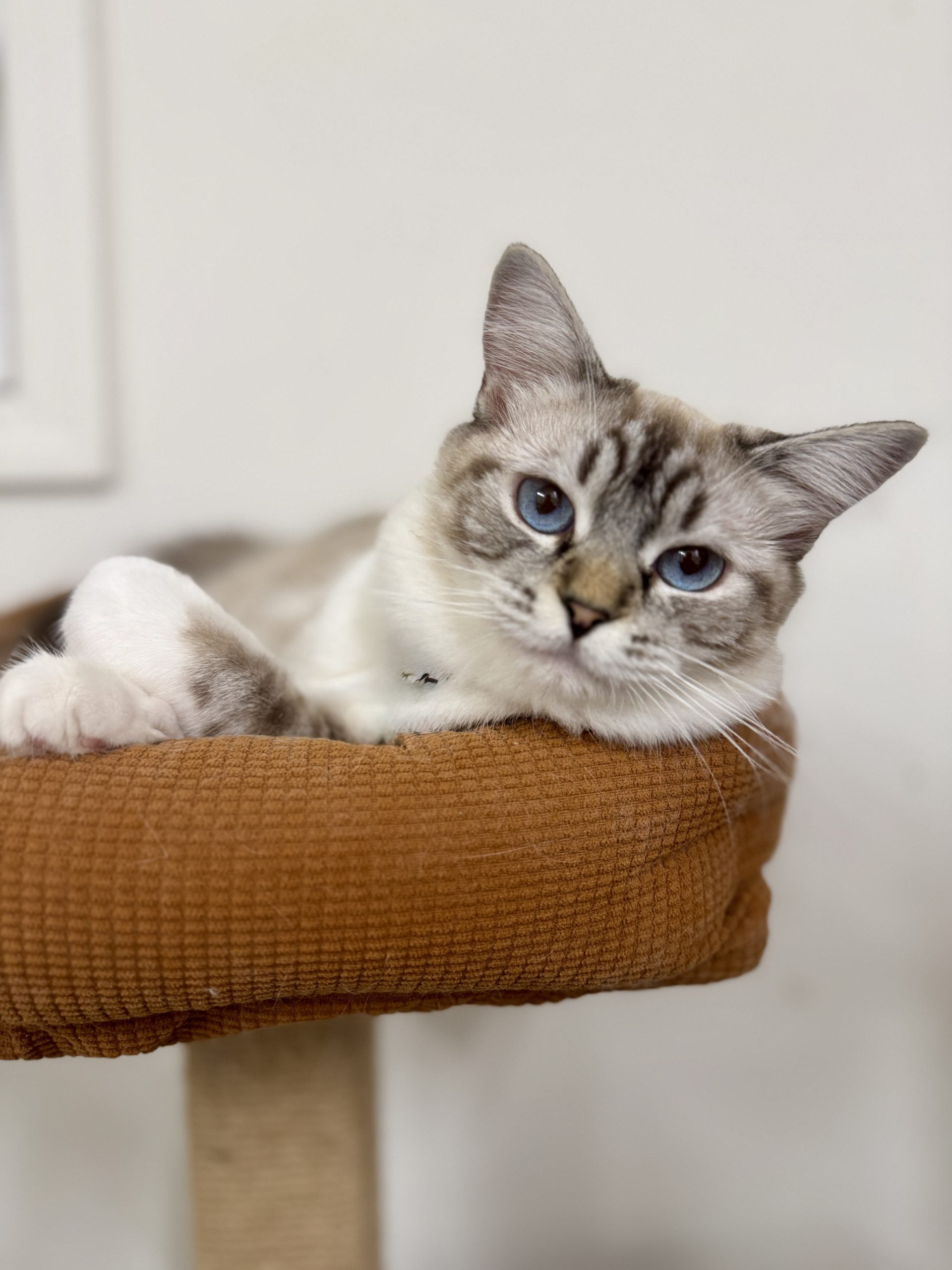
Pigment develops on the cooler parts of the body — so the points go dark and the core stays pale.
Traditional kittens arrive pale, then their color slowly comes in over the first few weeks.
The contrast keeps sharpening as they grow. The adult is the same cat, just filled in.
The Whole System: A Color, Plus a Pattern
Every Ragdoll coat is really just two choices stacked together — which color, and how much white. Here's each on its own.
Start with a color
Seal
The darkest and most traditional — the deep, dramatic points people picture when they think "Ragdoll." So dark they read nearly black, over a cream-to-fawn body with the strongest contrast of any color.
Blue
A softer, dilute version of seal — cool gray points over a light gray body, gentle and silvery instead of high-contrast.
Chocolate
A light, warm brown — milk-chocolate points on an ivory body, with a gentler, cozier contrast than seal.
Lilac
A dilute of chocolate and the softest of all — pale, frosty gray points with a hint of pink-purple, over a very light body. Almost pastel.
Then choose a pattern
Colorpoint
No white anywhere. The points (ears, face, legs, tail) are the darkest, the body is a lighter shade of the same color, and the eyes are a deep blue. This is the most classic, Siamese-adjacent look.
Mitted
The same dark points as a colorpoint, but with crisp white "mittens" on the front paws, white "boots" up the back legs, and a white chin. Many mitted Ragdolls also have a white stripe down the belly. The face still wears a full colored mask.
Bicolor
The most white of the three. White legs, chest, and belly, plus an inverted white "V" across the face. The ears and tail stay colored, and a "saddle" of color sits across the back. Because there's so much white, bicolors often read as lighter overall.
Color and pattern are two separate choices that stack — any of the four colors can wear any of the three patterns.
Ragdoll & Cherubim: Two Coat Families, One Breed Group
If you've seen the words mink, sepia, or Cherubim and felt lost, here's the plain version — the vocabulary is more complicated than the thing it describes.
Every Ragdoll carries a gene that controls how much color develops on the body versus the points. There are two versions of it, and a kitten inherits one from each parent. Which two they land on decides how rich the coat looks — and what color the eyes turn.
Traditional
Two pointed copies. Pale body, dark points, and deep blue eyes — the classic Ragdoll look.
Born pure whiteMink
One pointed copy, one richer. A deeper body with contrast still at the points, a plush coat, and aqua eyes — a blue-green found nowhere else in the breed.
Born with colorSepia
Two richer copies. The deepest of the three, body sitting close to the point color, with gold, chartreuse, or green eyes.
Born with colorThe two genes blend rather than compete — a mink lands almost exactly halfway. It's a spectrum, not three separate things.
So What Does "Cherubim" Mean?
It's simply the official registry name. On May 1, 2025, TICA gathered every Ragdoll into one breed group — with two designations inside it:
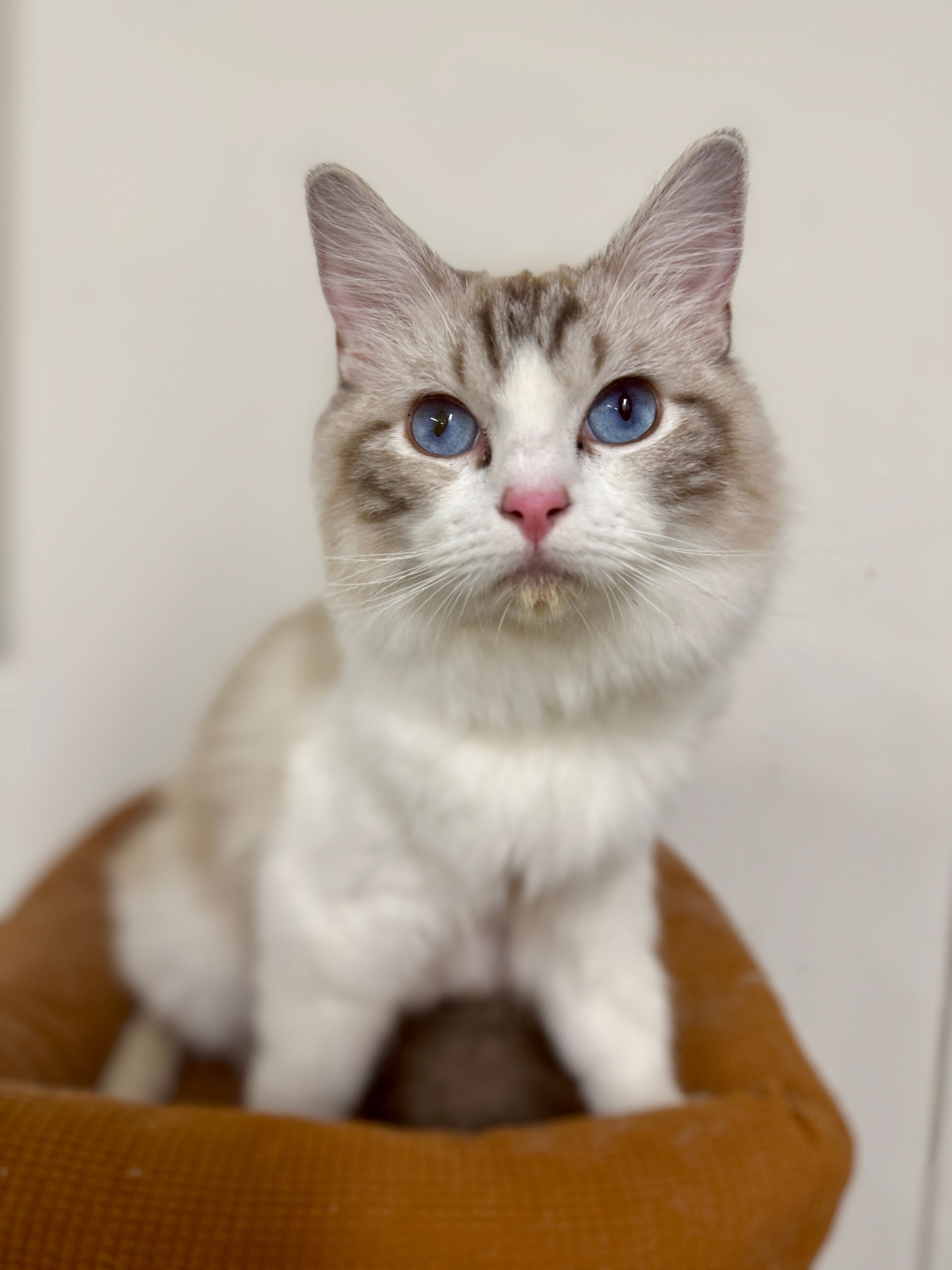 RD
RDRagdoll
The blue-eyed pointed cats — colorpoint, mitted, and bicolor.
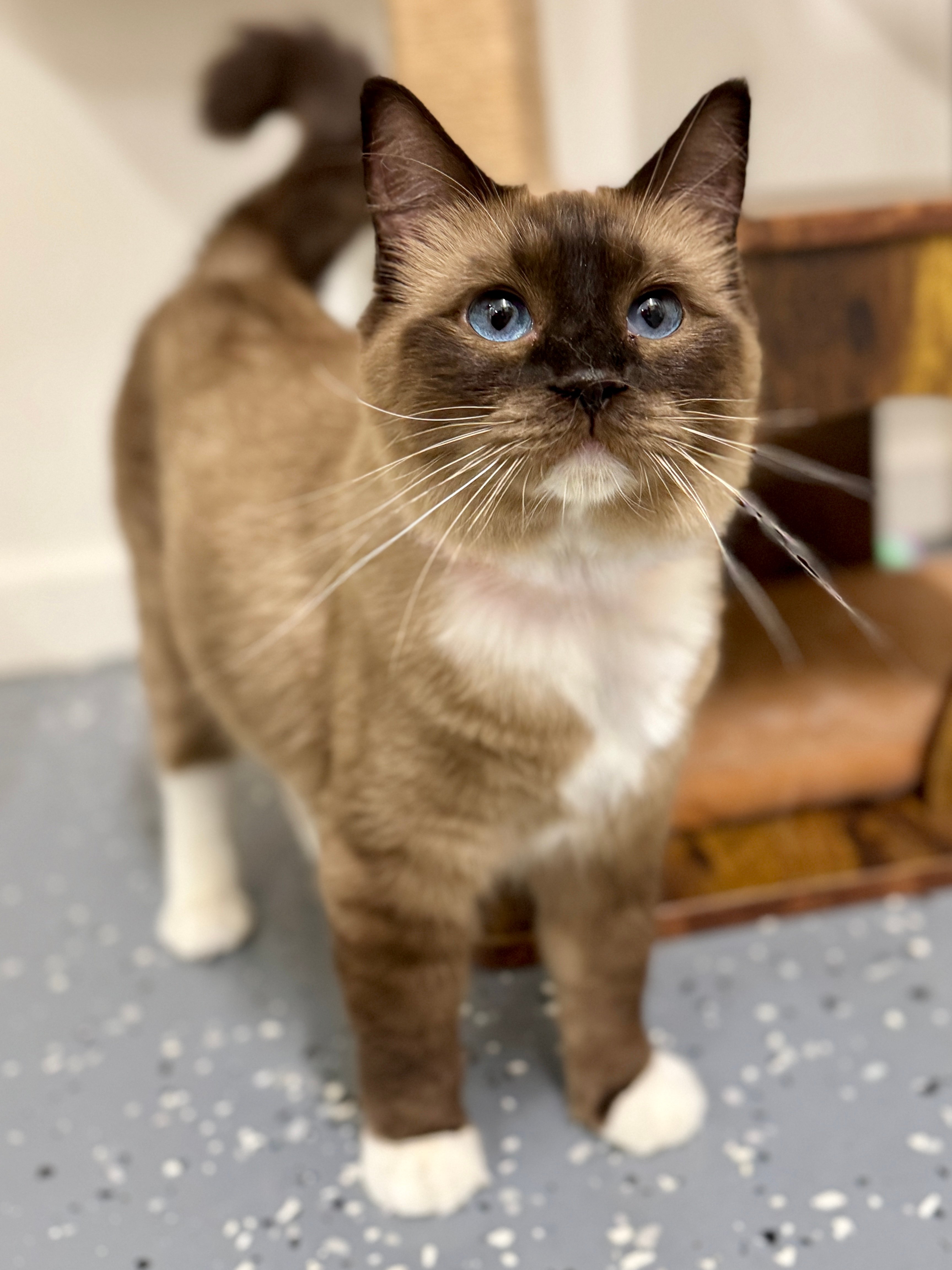 CB
CBCherubim
The mink, sepia, and solid cats — in those same three patterns.
One group, one written standard for head, body, coat, and temperament — they differ only in coat color, eye color, and which class they show in. All three patterns appear on both sides.
A Bit of History
The name isn't new. Ann Baker — who founded the Ragdoll breed in 1960s California — used "Cherubim" for these cats from the very beginning. TICA simply gave it back, along with something they'd never had: the right to compete for championship titles.
A "seal mink mitted Cherubim" is still a Ragdoll — same lines, same temperament, just a richer coat and an honest name for it.
How to Tell Them Apart
TraditionalRD | MinkCB | SepiaCB | |
|---|---|---|---|
| Body color | Pale, even, minimal shading | Even, medium shade — clear contrast to points | Close to the point color — gentle contrast |
| Eye color | Deep blue | Aqua (blue-green to green-blue) | Gold, chartreuse, or green |
| At birth | Pure white | Visible color already | Visible color already |
| Coat feel | Silky | Silky, often described as plush or velvety | Silky, often described as plush or velvety |
| Patterns | Colorpoint · Mitted · Bicolor | Colorpoint · Mitted · Bicolor | Colorpoint · Mitted · Bicolor |
| Colors | Seal · Blue · Chocolate · Lilac (+ lynx, tortie) | Same four colors (+ lynx, tortie) | Same four colors (+ lynx, tortie) |
| Registers as | Ragdoll (RD) | Cherubim (CB) | Cherubim (CB) |
Everything in the bottom half of that chart is identical. The four colors, the three patterns, the lynx and tortie variations — they all exist in both families. A blue mitted traditional and a blue mitted mink are the same color and the same pattern; one just wears it richer.
How Mink Kittens Happen
This is the part families are usually most curious about, and it's refreshingly predictable — no guesswork, no surprise mutation. A kitten inherits one copy from each parent, and the combinations are simple arithmetic:
| Pairing | What the litter can be |
|---|---|
| Traditional × Traditional | All traditional pointed |
| Traditional × Mink | About half traditional, half mink |
| Mink × Mink | About half mink, a quarter traditional, a quarter sepia |
| Traditional × Sepia | All mink |
| Mink × Sepia | About half mink, half sepia |
| Sepia × Sepia | All sepia |
Two traditional Ragdolls can never make a mink — if a kitten is mink, at least one parent was, too.
The gene can't hide and skip a generation. And a mink parent's pointed kittens are pointed Ragdolls — they register as Ragdoll (RD), not Cherubim. One litter can hold both.
Because we know each pairing, we can usually tell you within the first days of life which kittens are which — and with mink and sepia kittens, you can often see it immediately, since they arrive already wearing their color.
Color Chart
Seal
Deep, near-black points on a cream-fawn body — the strongest contrast of any color.
Blue
Soft, cool-gray points on a light gray body — silvery and muted.
Chocolate
Light, warm milk-brown points on an ivory body — a gentle, cozy contrast.
Lilac
Pale, frosty gray points with a hint of purple-pink, over a very light body — almost pastel.
These descriptions are for traditional pointed Ragdolls. In a mink, every one of these four colors appears warmer and deeper through the body, with less contrast between body and points — a seal mink, for example, carries a rich golden-brown body rather than a cream one.
Nose color tends to follow the pattern. In colorpoint and mitted Ragdolls, the nose usually matches the point color — a seal has a dark brown nose, a lilac a lavender-pink one. In bicolors, the nose is typically pink, because of all that white on the face.
Pattern Chart
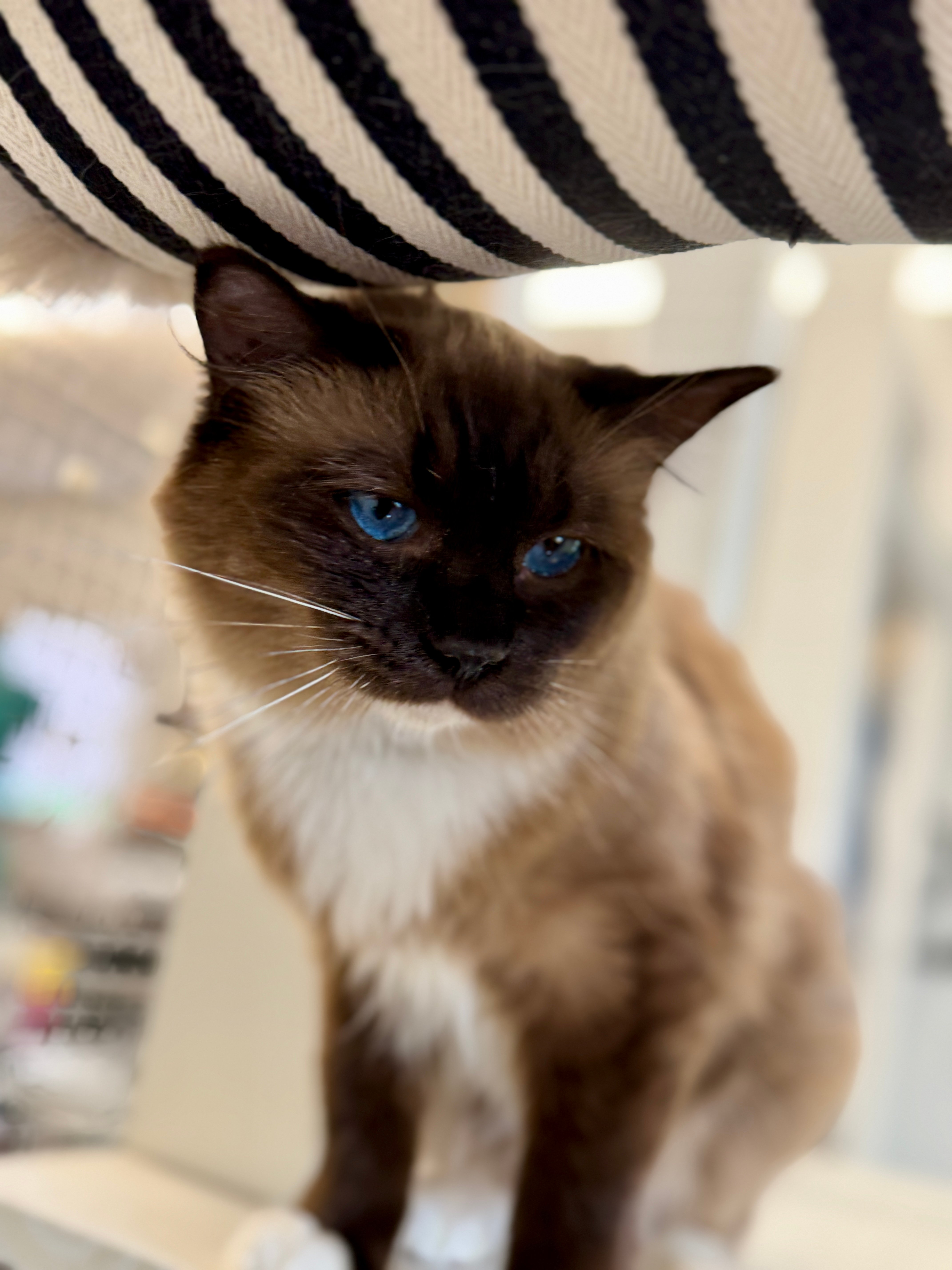
Colorpoint
No white anywhere; dark points on the ears, face, legs, and tail.
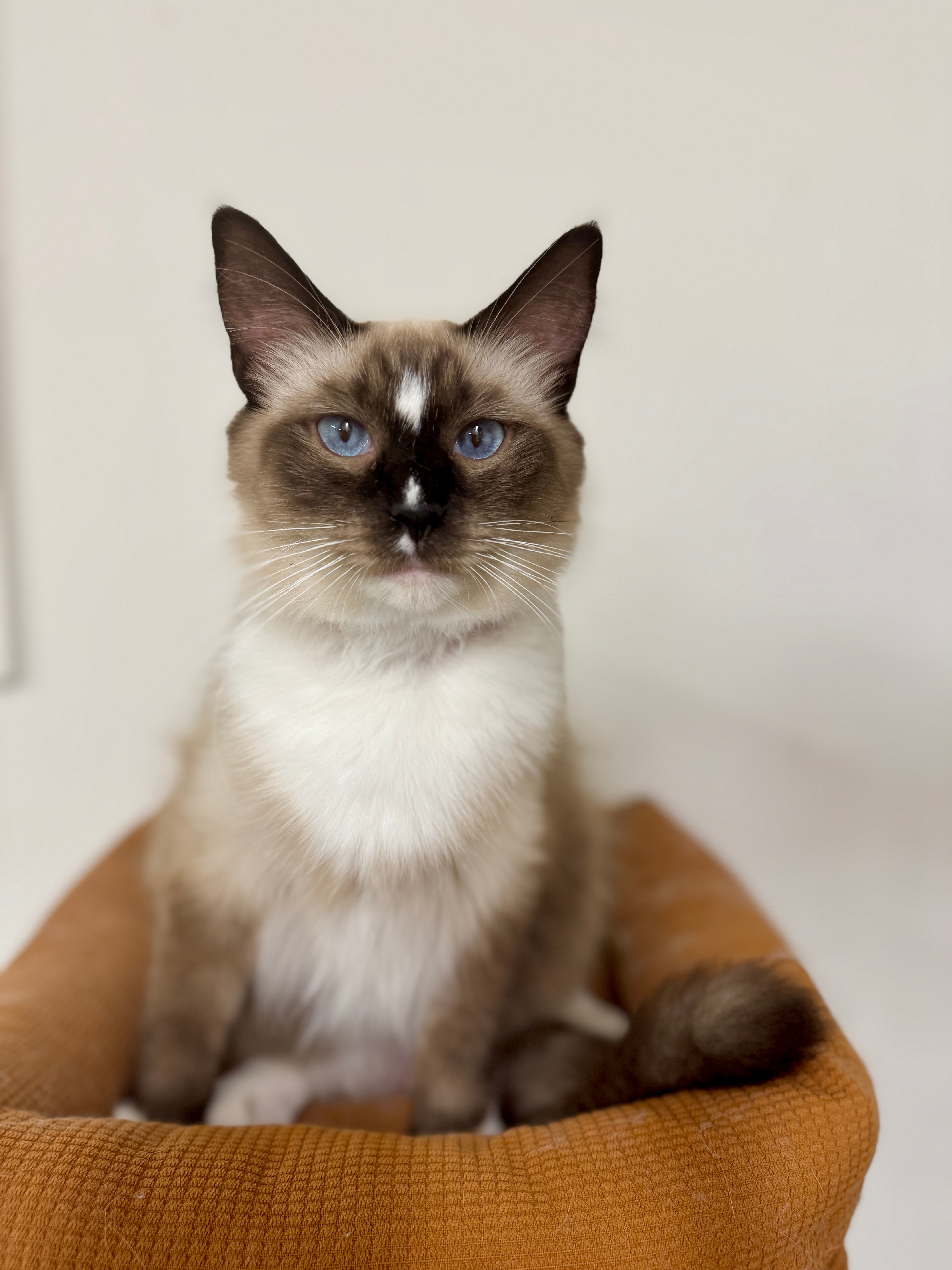
Mitted
White "mittens" on the front paws, white "boots" up the back legs, and a white chin — often a white belly stripe too, with a full colored mask.
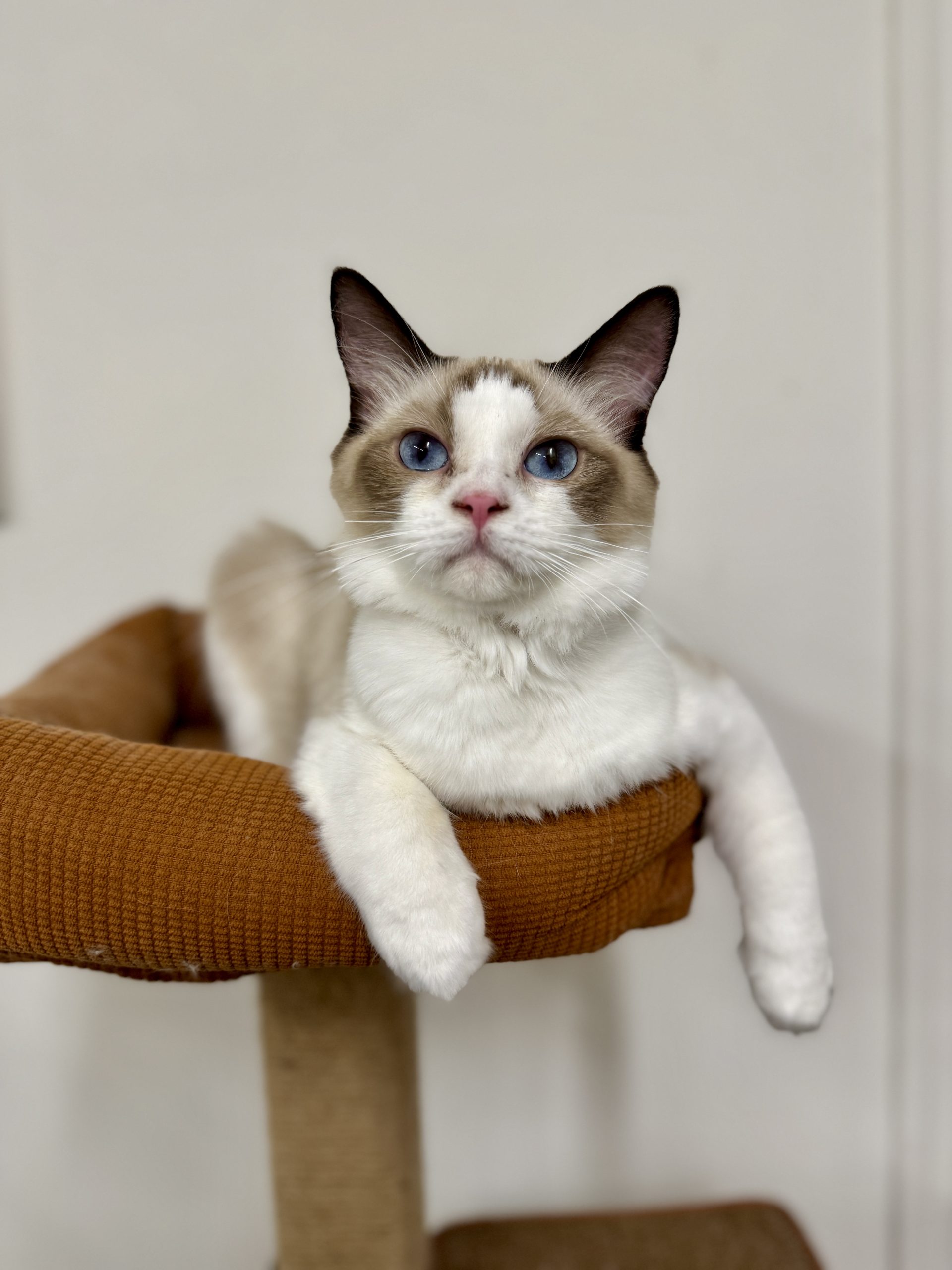
Bicolor
White legs, chest, and belly, plus an inverted white "V" on the face; the ears and tail stay colored.
Common Combinations You'll See
Color and pattern combine, so you'll often hear names like:
Seal Bicolor
Dark brown points with lots of white.
Blue Mitted
Soft gray points with white mittens and boots.
Chocolate Colorpoint
Warm brown points, no white.
Lilac Bicolor
Pale pastel points with lots of white.
Seal Mink Mitted
A rich golden-brown coat with white mittens, boots, and chin — and aqua eyes.
Seal Colorpoint
The classic look — dark brown points, no white.
Blue Bicolor
Soft gray points with lots of white.
Chocolate Mitted
Warm brown points with white mittens and boots.
The naming follows a simple order: color, then coat family if it's a mink or sepia, then pattern. "Blue mink bicolor" is a blue cat, in the mink coat family, wearing the bicolor pattern.
Why Some Ragdolls Look Lighter Than Others
If two Ragdolls are the same color but one looks much lighter, it's almost never the point color itself. Three things explain it:
More white markings, as in a bicolor, make a cat read lighter overall — even when the underlying color is the exact same seal or blue as a darker colorpoint.
A mink of any color runs deeper and warmer through the body than a traditional of that same color.
Traditional Ragdolls darken as they mature, so an older seal point can look far richer than it did at a year old.
It's one reason mink and traditional are best told apart by eye color — which doesn't shift the same way.
What Colors & Patterns Do Aurora Kittens Come In?
We're not a one-look cattery. Across our litters you'll find the classic seal, blue, chocolate, and lilac in colorpoint, mitted, and bicolor — plus some of the breed's most beautiful variations, including lynx (tabby) markings and tortie. And because we keep mink lines in our program, some of our litters include mink kittens as well. Some are common; some are quite rare.
It's intentional, too. When we choose which kittens to keep back as our future kings and queens, we do it with that variety in mind — so we can keep producing the full, gorgeous range instead of narrowing down to just one look.
Every Aurora kitten is the same price, no matter its color or pattern.
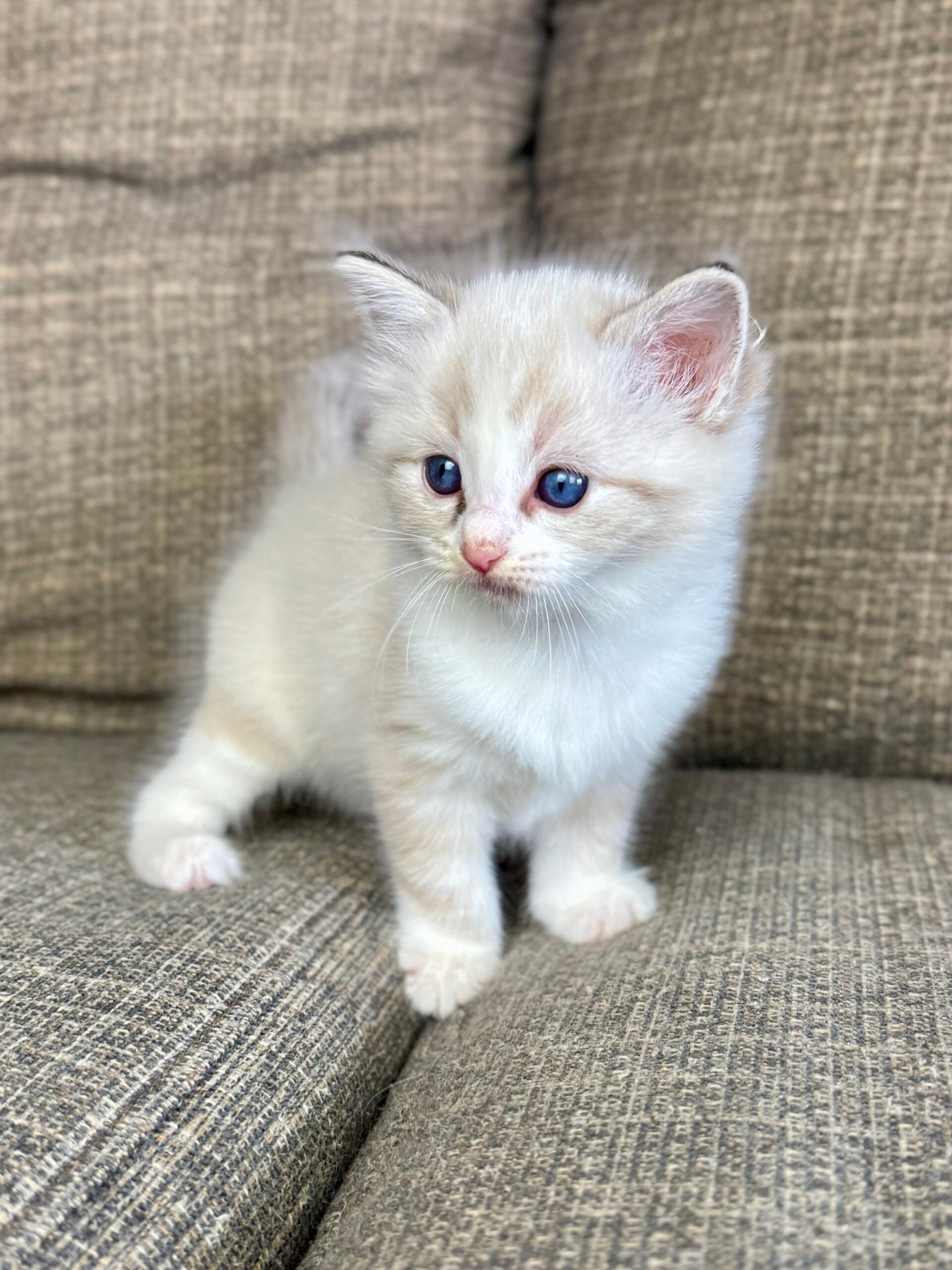
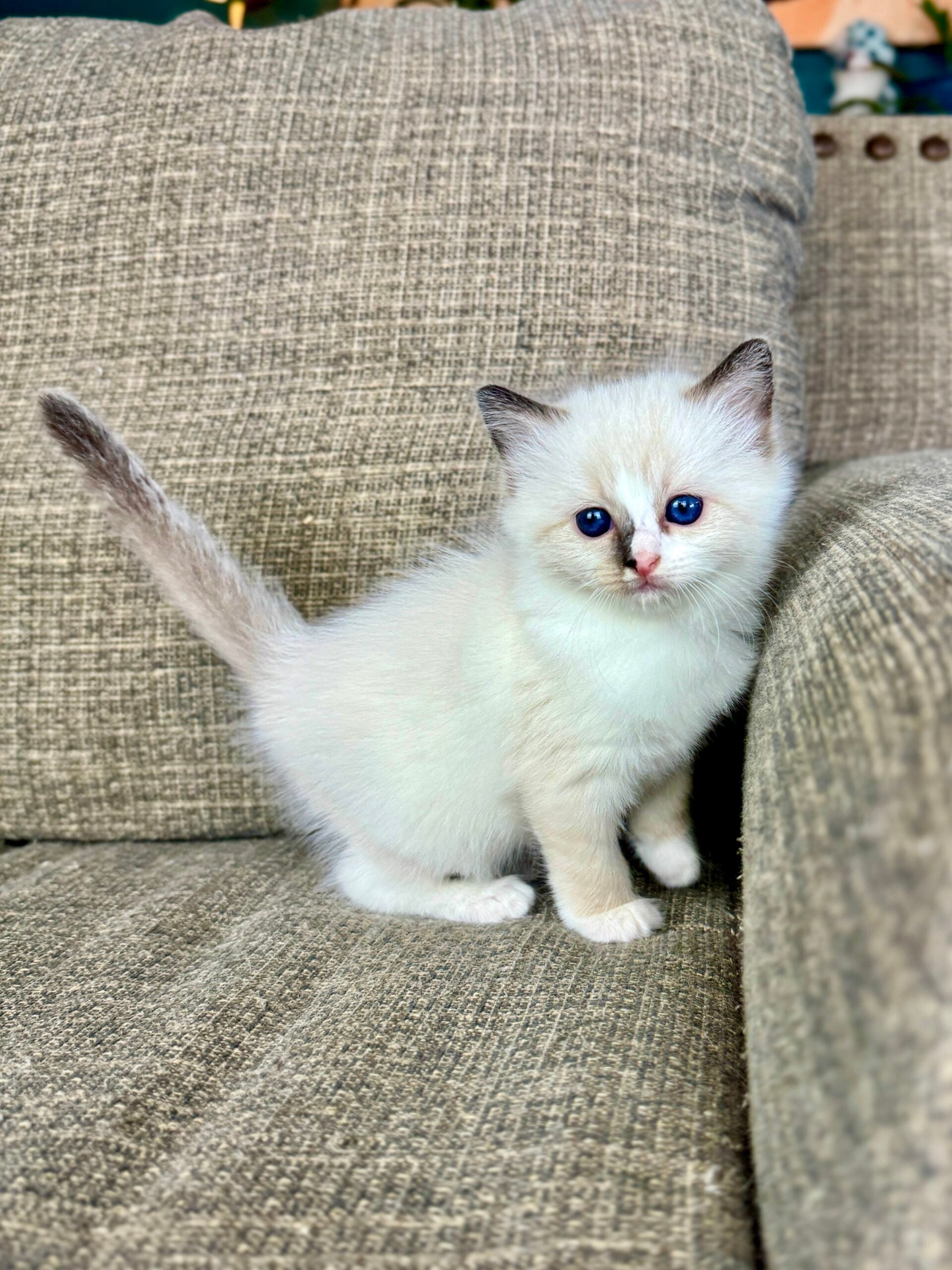
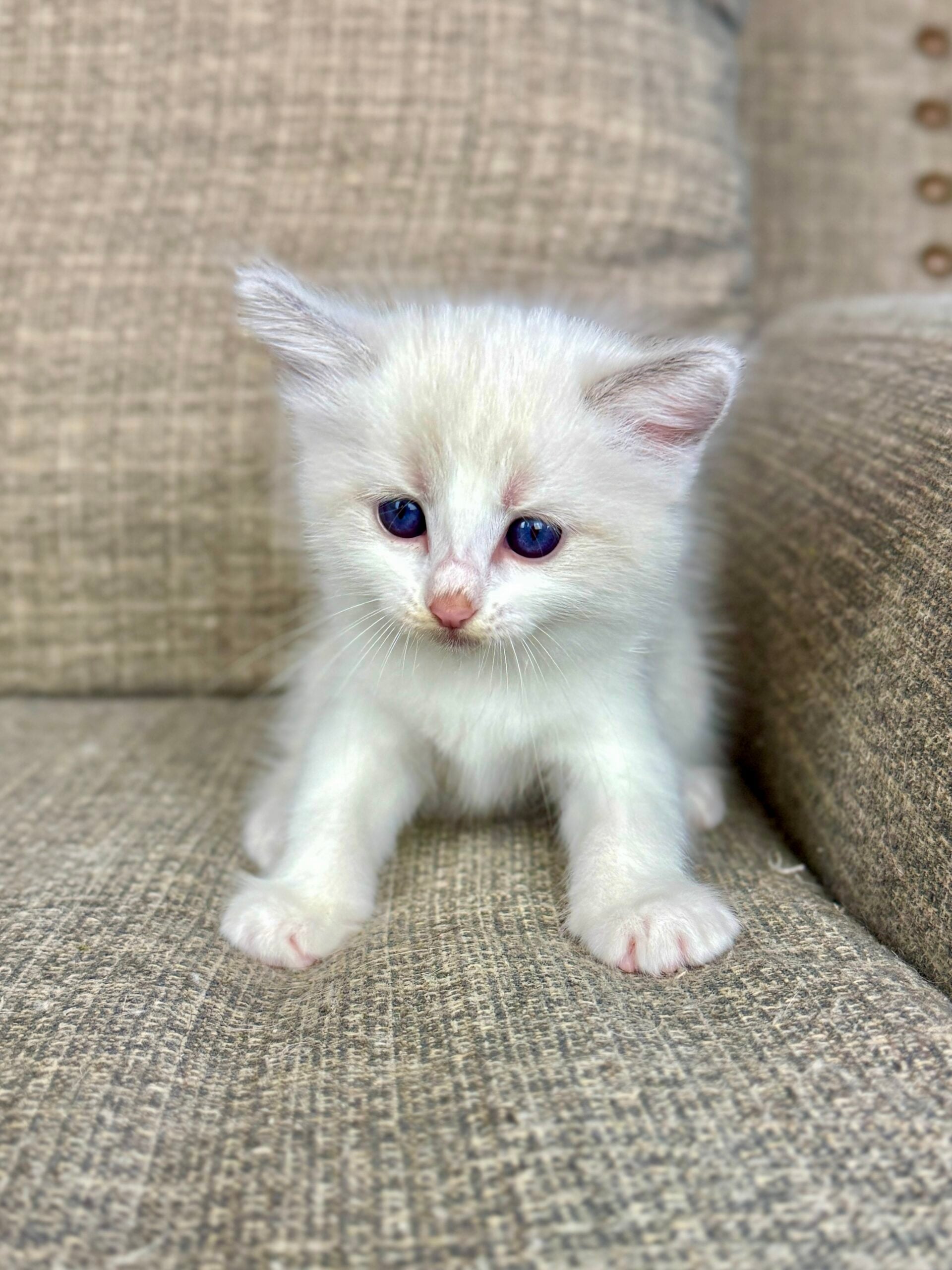
The rarest coat we produce costs exactly the same as the most classic one. Every kitten we raise is healthy, beautifully socialized, and just as deserving of a wonderful home — we'd never want a price tag to make one "worth more" than another, or to steer which kitten a family falls for. The color is simply the beautiful bonus.
A Note on Your Kitten's Paperwork
Straight From Us
We'd rather tell you this up front than have it surprise you when an envelope arrives. If you bring home a mink kitten from us, the TICA registration will read Cherubim (CB) rather than Ragdoll (RD).
Nothing about that is a downgrade, and nothing about your kitten changed. It's the designation TICA created in May 2025 so that mink and sepia cats — which have existed in Ragdoll lines since the very beginning of the breed — could finally be formally recognized and shown for championship instead of being treated as a fault. Both designations live inside the same Ragdoll Breed Group and are judged against the same standard.
Your kitten comes from the same program, the same parents' health testing, the same socialization, and the same guarantee as every other Aurora kitten. If you ever want to talk it through, just ask — we're happy to walk you through exactly what your kitten's papers say and why.
— Ashley & Dylan
Every Litter Is a Surprise
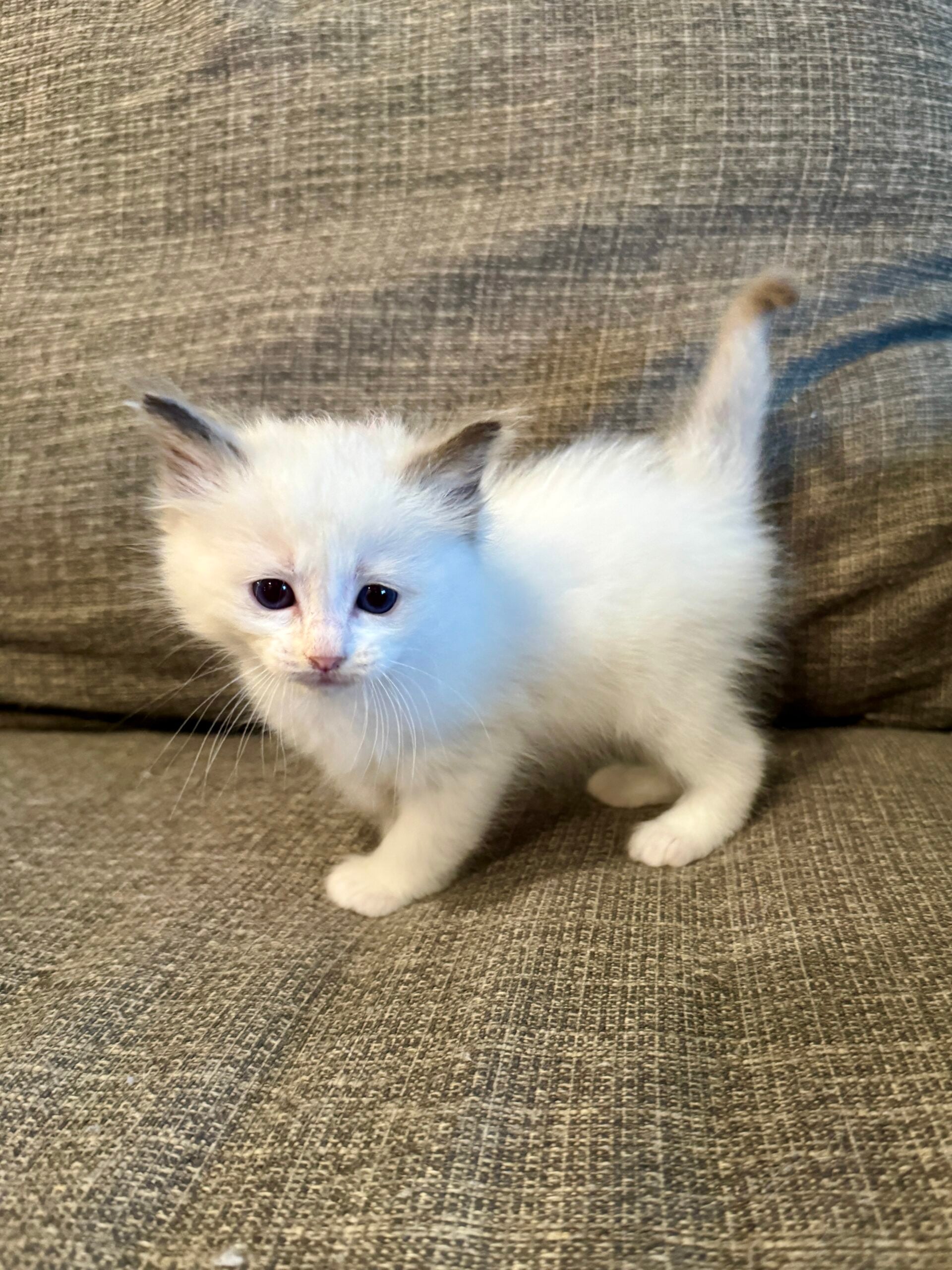
With our traditional kittens, the color is always a surprise we get to watch unfold, because they're born nearly white. Every time a litter arrives, it's a little like opening one of those blind-box toys — we never quite know which colors and patterns we're going to get, and then over the first weeks we get to watch each kitten's color slowly come in. It's honestly one of the most fun parts of the job.
Our mink kittens spoil the surprise a bit by showing up already colored — but they keep deepening right alongside everyone else. Either way, the tiny kitten in an early photo will look richer and more defined by the time they come home. Color continues to deepen and define for up to two years. The kitten you fall for and the adult they become are the same cat, just with more of their color filled in.
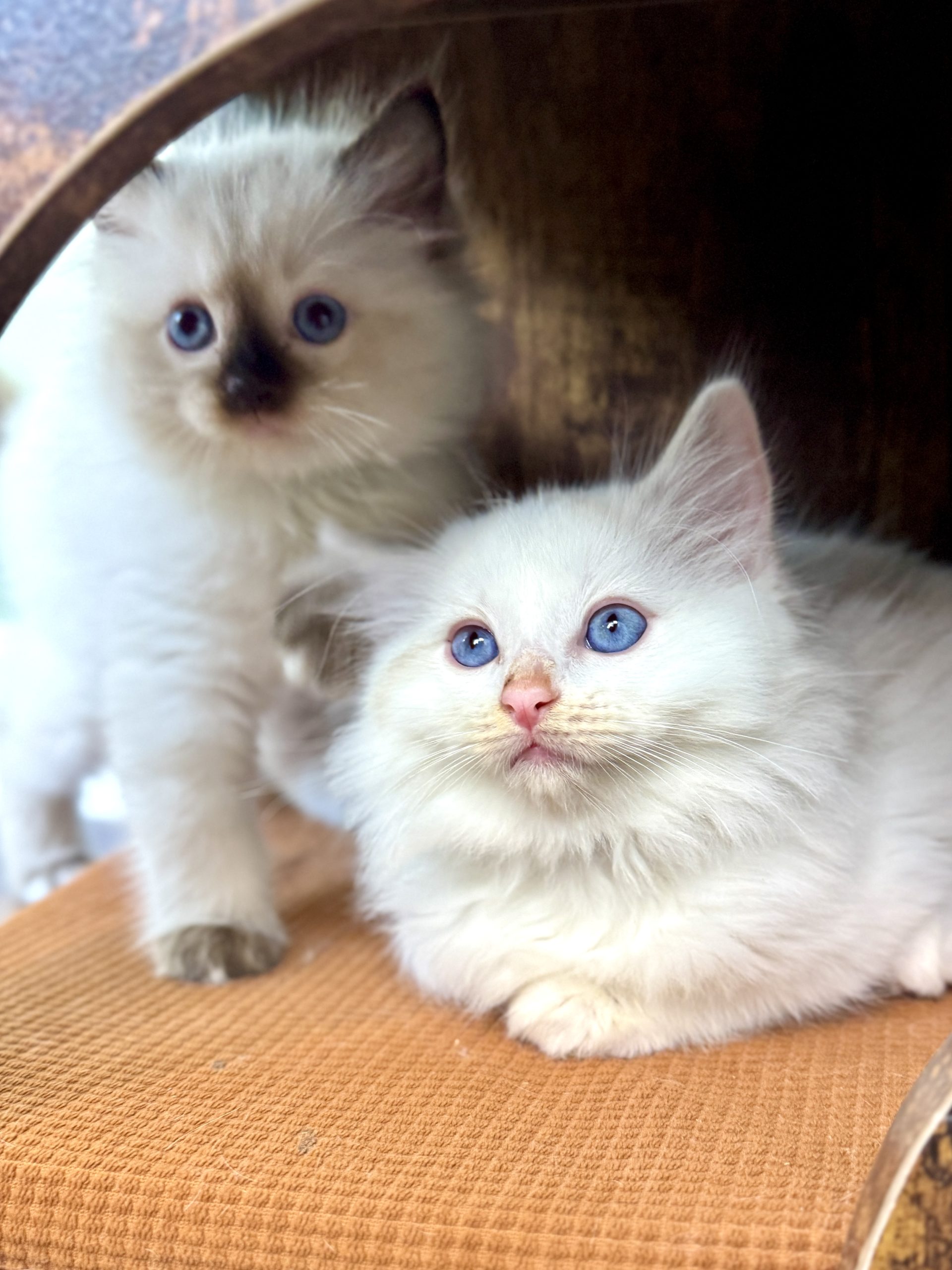
A seal point, newborn to grown
What Color Will My Kitten Be?
A kitten's color and pattern come from the genetics of both parents. Because Ashley and Dylan know each pairing, we can often tell what a kitten will be within the first days of life — and we'll always talk you through it.
What you see at a few weeks old is a preview — not the finished picture.
A Little Color Genetics (The Friendly Version)
You don't need any of this to choose a kitten — but if you're curious, here's how the four colors relate. Each full-strength "dense" color has a lighter "dilute" twin:
A kitten needs the dilution gene from both parents to be blue or lilac, and the chocolate gene from both parents to be chocolate or lilac. Mink and sepia come from a completely separate gene — which is why they stack: a kitten can be blue and mink, or chocolate and sepia. The color gene decides which color; the mink gene decides how richly it fills in.
Two dilute parents can't make a dense kitten — but two dense parents can make dilutes, if both carry it.
Example Outcomes
A few illustrations of how pairings can play out. The dimmed colors only appear if the parents happen to carry the hidden gene for them:
Dilute and chocolate are both recessive genes, so a kitten needs a copy from each parent to show them — which is exactly why two lighter parents can quietly carry the potential for the darkest kittens of all.
Layer the mink chart from earlier on top of any of these and you have the whole picture. A seal × seal pairing where one parent is mink, for instance, gives you a litter of seal kittens — about half traditional pointed, about half seal mink.
What Is a "Mismarked" Ragdoll?
You may come across the term "mismarked" when reading about Ragdolls. It sounds like something's wrong — but it really isn't.
The breed has a show standard describing an ideal set of markings: perfectly even mittens, a symmetrical face, white exactly where the pattern "should" have it. A mismark is simply a marking that lands a little outside that ideal — a spot of color where the standard expects white, a mitten that's a touch uneven, a little dash of white on a colorpoint.
Here's the part that matters: a mismark has absolutely no effect on a cat's health, genetics, or temperament. It's purely about where a bit of color or white happened to land. A mismarked Ragdoll is every bit as healthy, silky, blue-eyed, and affectionate as any other.
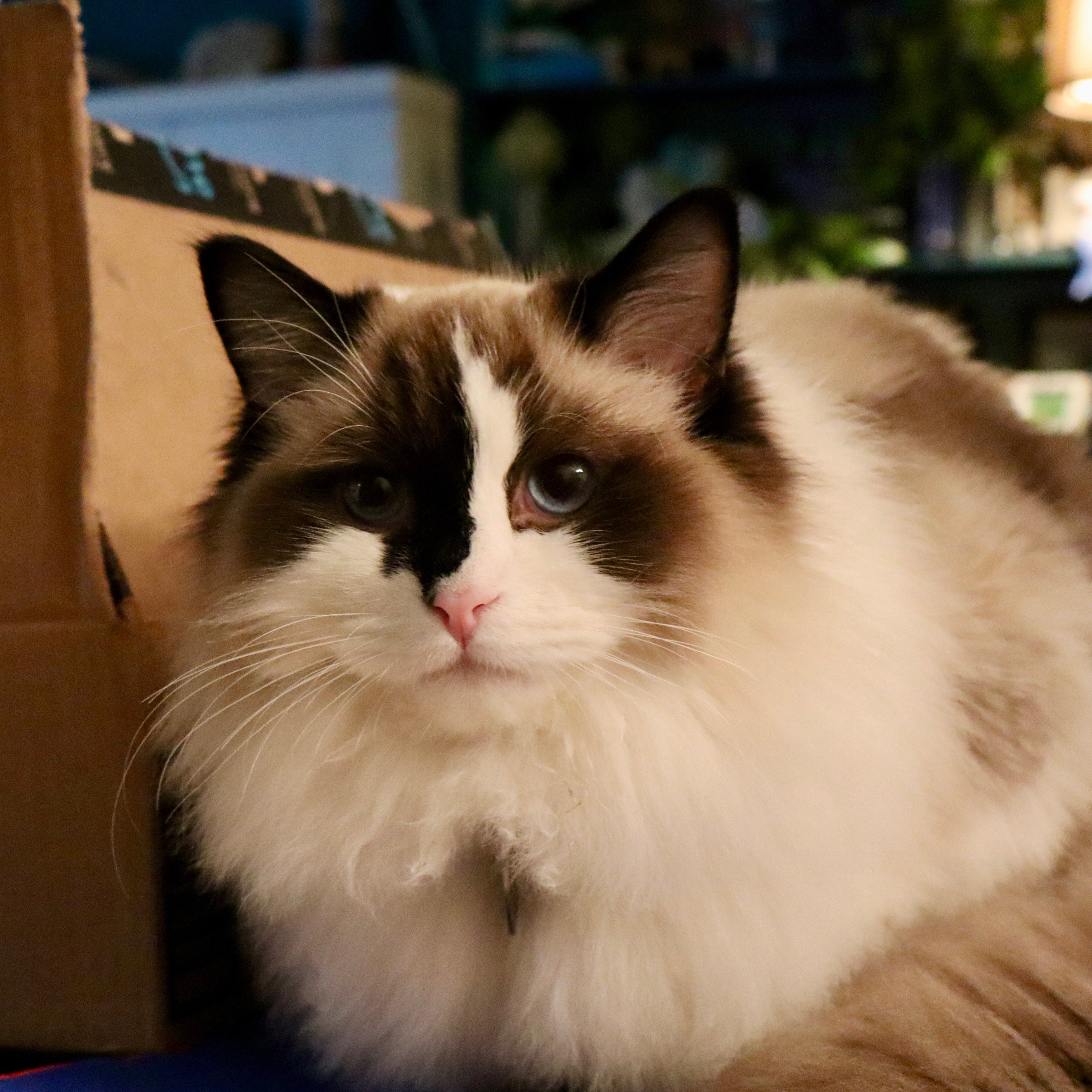
Honestly? We have a soft spot for them. A little asymmetry or an unexpected splash of white gives a cat a one-of-a-kind look that feels like part of who they are — our own Jellybean is a touch mismarked, and we wouldn't change a single thing about him. What we care about, first and always, is a healthy, wonderfully-tempered kitten.
The markings are just the wrapping paper.
The same thinking applies to the mink and sepia coats. For years those cats were treated as faults in the show ring rather than as the heritage colors they always were — the registry has since caught up. It's a good reminder of how much of this vocabulary is about show charts, and how little of it is about whether a cat is healthy, well-raised, and wonderful to live with.
Does Color Affect Personality?
No — not in the slightest.
A kitten's coat and its temperament are completely unrelated, and that holds just as true across the mink and traditional coats as it does across seal and blue. Whatever color or pattern an Aurora kitten wears, they're raised to be the same affectionate, easygoing, people-loving companion. The coat is simply how a Ragdoll looks; it tells you nothing about who they are.
Choosing the Right Ragdoll for You
Here's the freeing part: because every Aurora kitten is raised the very same way — the same health testing, the same socialization, the same daily love — they all grow into affectionate, well-adjusted companions. There isn't a wrong one to choose. Most families simply decide two things:
The coat you fall for
Whichever color and pattern steals your heart — every one the same price, and every one just as wonderful.
A boy or a girl
Both grow into equally sweet, affectionate, people-loving companions.
At this age, kittens are still growing into who they'll be, and so much of that is shaped by their life with you. You might notice little things in the moment — one seems a bit more playful today, another a little more mellow — but those are snapshots, not fixed traits. However you choose, you're getting a wonderful cat. Curious how personalities develop as they grow? Our guide to Understanding Ragdoll Personalities digs in.
The Best Part Is Watching It Arrive
There's something genuinely magical about watching a Ragdoll's color develop. The points darken, the body richens, the contrast sharpens, and the cat you met as a pale little kitten grows into their full color over the first year or two. If you join the Aurora family, you'll see a lot of that unfold in our weekly Monday videos.
See Available KittensMore From the Library