

Getting to Know Ragdolls
Male vs Female Ragdoll Cats: Which Is Right for You?
Boy or girl? What actually differs between the two — and what matters far more.
The Question We Hear First
One of the first questions families ask us is a simple one: should we choose a boy or a girl? It’s a great question, and it usually comes wrapped in a lot of confident-sounding advice.
You’ve probably heard some version of all of it.


Here’s the honest answer, after living with these cats every day:
Sex tells you far less than most people think.
A Ragdoll’s personality is shaped much more by genetics, early socialization, and the home they grow up in than by whether they’re a boy or a girl. Both grow into the same deeply affectionate, people-loving companions Ragdolls are known for — and that’s exactly what we raise them to be.
The Temperament That Comes First
Before we talk about the differences, it’s worth naming what boys and girls share, because it’s most of the picture.
Every kitten we raise, male or female, is built on that same loving foundation.
When you’re choosing between a boy and a girl, you’re choosing between two versions of the same wonderful temperament, not two different personalities.
Side by Side

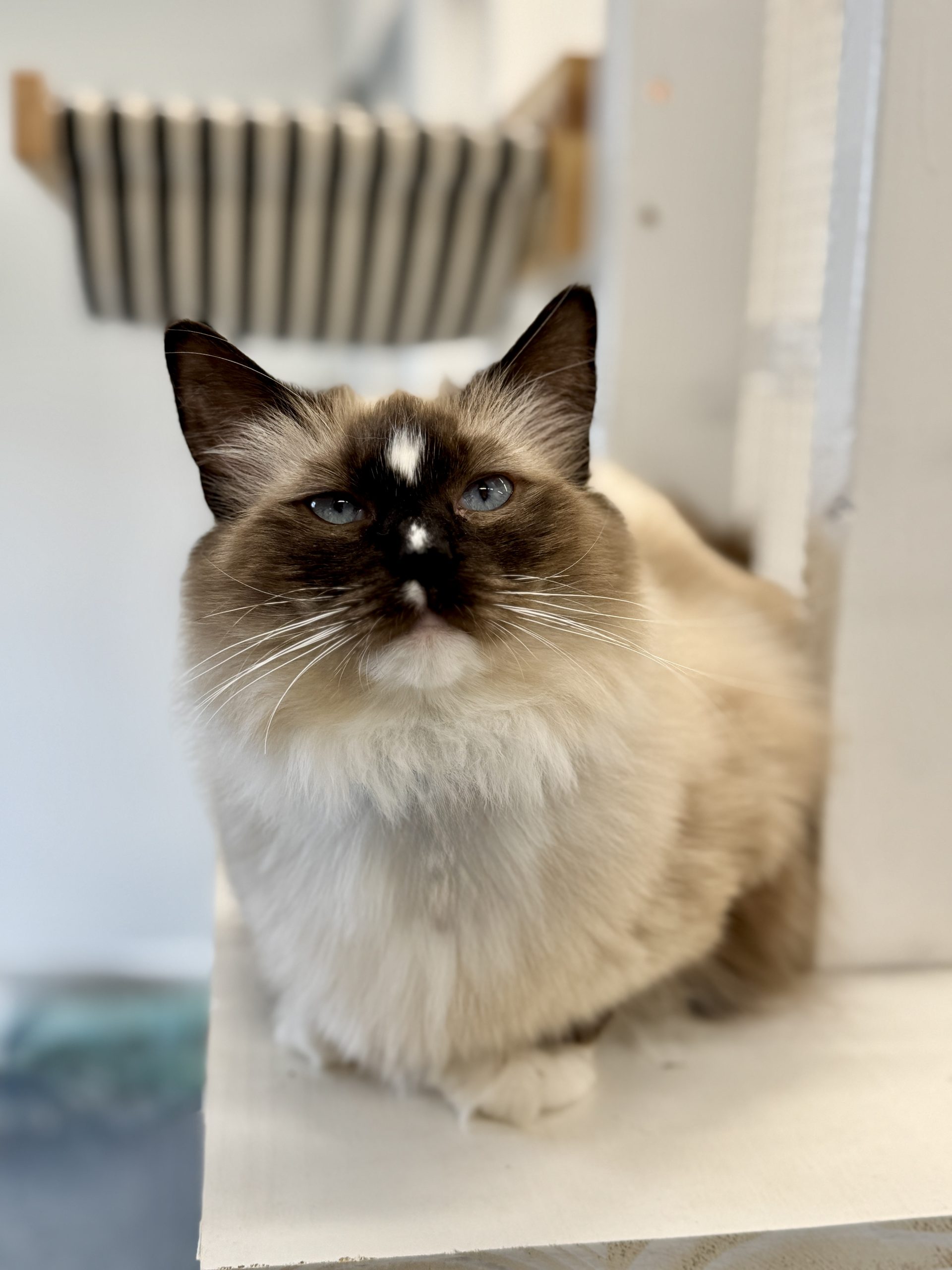
Male Ragdolls
Male Ragdolls are known for being large, affectionate, and easygoing. They’re often the ones described as goofy — social, food-motivated, and happy to be in the middle of whatever the household is doing. Many males hold onto their playful, kitten-like energy for years, and they tend to be enthusiastic about attention and lap time.
Males also tend to grow into the larger, plush teddy-bear look many people picture when they imagine a Ragdoll, often reaching 15–20 pounds at full maturity. If you love the idea of a big, soft, sociable cat who greets you at the door, a male may be a natural fit.
Female Ragdolls
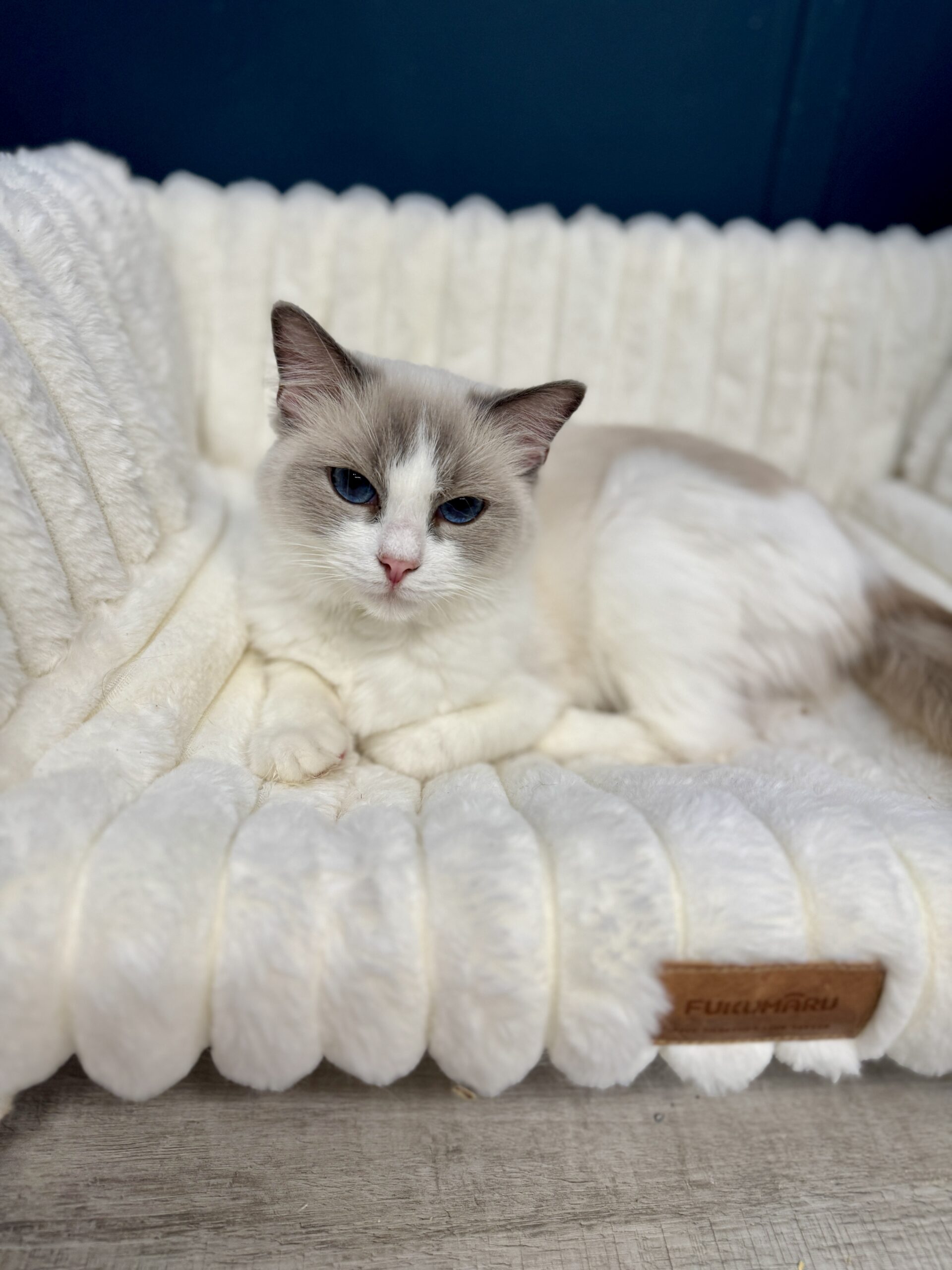
Female Ragdolls are often described as graceful, intelligent, and deeply bonded. They tend to be loving and devoted, curious about their surroundings, and sometimes a touch more observant in a brand-new situation — they may take a moment to survey before diving in, then settle right into the same affection and play.
Females are usually a little smaller and more refined, often landing around 10–15 pounds. Many form very strong, focused attachments to their people. If you’re drawn to a slightly more petite cat with a devoted, tuned-in presence, a female may be exactly right.
Common Myths

Are Males Really More Affectionate?
Not as a rule.
It’s one of the most common things we hear, and it just isn’t a reliable guide. A well-socialized female is every bit as cuddly and loving as a male. What actually predicts affection is how a kitten is raised — not whether it’s a boy or a girl.

Are Females Really More Independent?
It’s a difference in style, not in how much love a cat has to give.
Usually what people read as independence is simply a female taking a few extra seconds to observe a new person or situation before engaging. Once she’s comfortable, she’s just as affectionate and connected as any male.
Adding a Kitten to a Home That Already Has a Cat
If you already have a cat, you’re probably wondering whether a boy or a girl will settle in more smoothly. The honest answer: sex isn’t really the deciding factor. Because every Aurora kitten goes home spayed or neutered, the hormone-driven territorial behavior people worry about is mostly off the table. What actually shapes how two cats get along is personality, energy level, age, and — most of all — a calm, gradual introduction.
That said, after years of watching our own cats meet and mingle, here are the gentle tendencies we notice. These are our observations, not rules:
Deciding between a boy and a girl is one question; whether to bring home two is another.


The boys
Males often come in a little more timid — happy to hang back, take their cues from everyone else, and go with the flow. In our home, the boys are usually content to just do whatever the rest of the crew is doing, and to be a touch lazier about it.


The girls
Females often take a little time to sort out the pecking order, and can be a bit more assertive at first as they figure out where they fit. Our queens tend to run the show — and tend to stay a little more active, a little longer.
Either way, it almost always works out beautifully. Sometimes two cats are curled up together within days; sometimes it takes a few weeks — even a couple of months — of patience for a real friendship to bloom. And because our kittens grow up socialized around cats of all ages from their earliest weeks, they arrive already used to feline company, which gives any introduction a head start.
A few things that help any introduction go smoothly:
Give the newcomer their own space at first, and let the two get used to each other’s scent before they meet — swapping a blanket works beautifully.
Short, calm, supervised meetings beat one big introduction. Let them set the pace.
Enough litter boxes, food and water stations, beds, and perches means no one feels they have to compete.
Treats and praise when they’re near each other help both cats associate the newcomer with good things.
Want the full step-by-step? Our guide to Introducing Your Kitten to Your Pets walks through introductions to both cats and dogs.
Every home and every cat is a little different, so take it at your own pace — with patience, it comes together far more often than not.
So Which Should You Choose?
A few things worth weighing:
If you want the largest, plushest cat in the room, males tend to run bigger. If you’d prefer something a bit more petite, look at the girls. Full-grown, that often means around 15–20 pounds for a male and 10–15 for a female.
Some families notice males lean a little more goofy and outgoing, and females a little more observant at first — but these are loose generalizations, and how a kitten is raised shapes far more. Both are deeply affectionate.
Think about your energy level, whether you have children or other pets, and how much lap time you’re hoping for. A well-socialized Ragdoll of either sex adapts beautifully, but it’s worth picturing your day-to-day.
And if you’re wondering when all that kitten energy settles into the classic mellow Ragdoll adult, our page on when Ragdolls calm down walks through what to expect as they mature.
Our Honest Advice
When it comes right down to it, here’s what we really believe: trust your gut. There are so many little variables that shape how a cat and a family fit together that no rule about boys or girls — or anything else — can outweigh your own intuition.
So sit with it. Look at that kitten, watch their videos, and notice how you feel. If one keeps drawing you back, that’s not random.
We’ve learned, again and again, that when a kitten feels right, it usually is. Let that feeling lead you more than any checklist.

Which One Is Yours?
When a kitten feels right, it usually is. Come meet the ones ready for their families — and see who keeps drawing you back.
See Available KittensMore From the Library